Animated Comic about LA Game Space
This thing is adorable, check it out. Its about why we need LA Game Space as a creative center of the gaming world
GAME PRODUCTION & RELEASE MANAGEMENT
Animated Comic about LA Game Space
This thing is adorable, check it out. Its about why we need LA Game Space as a creative center of the gaming world


The meteoric rise of alternative and experimental games over the last few years has brought gaming straight into the academic mainstream. This new critical analysis and study of games exists not in traditional computer science and engineering schools, but in art and design schools across the world. These developments necessitate a center for the greatest minds in the medium to gather, collaborate, and put out world-changing work. LA Game Space will provide that center for the advancement of the medium.

Taken near my house, more to come.
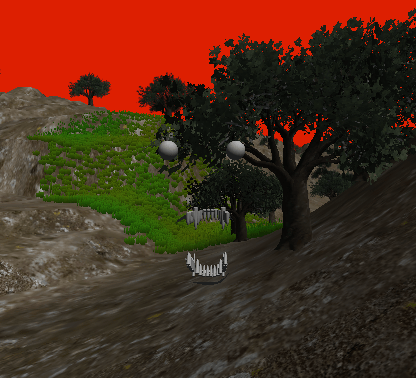


This is a piece that I wrote approximately a year ago on the release of Minecraft 1.0, the game has changed since then, but I believe this is one of the best things I’ve written about gaming yet.
There’s a certain, magical sense of childlike wonder permeating throughout every moment of Minecraft that few of us have experienced since the cessation of our childhoods. It is a memory marked by the wondrous sense of innocence that we took for granted before our lives became inundated with the harried strife of reality, a memory of a time when every day brought with it a joyful new experience, a time when every nook and cranny of the enchanted world could have been a cave filled with forgotten treasure, a world where monsters lurked under the bed every night and we cried to our parents to protect us. For all of us, it has been decades since we last experienced that euphoric sense of novelty accompanying every moment of our existence, the very next morning becoming something we perpetually dread. Childhood has been lost forever to the insatiable maws of tomorrow, innocence is shattered forever while we desperately try to put together the shards, be it through our first breakup, our first job, or even the rite of passage of entering Elementary School.

And thus is the beauty of Minecraft. It is through the simple joy of exploration through which a long-forgotten facet of our each of our individual histories is recalled to life. This is an incredible game recalling a time when everything was new and hope bled through our fantasies into reality. It thus goes without saying that this is not a game for the decade, but one for eternity.
Gameplay
In simplest terms, Minecraft is a sandbox/RPG in which every component of the gameworld can be modified by the player and used as a tool. The goal of the game’s RPG component is to collect resources and build structures during the day to survive the night, during which the monsters roam. This is an extremely open-ended style of play and the game’s infinite range of possibilities becomes immediately perceptible. There is a goal to Minecraft and there is a final boss and end sequence, but the game’s already open-ended main quest is easily eschewed when one realizes the creative potential the game’s construction system offers. In short, the player must collect arcane materials buried deep in the earth to create a portal to another dimension to slay the “Ender Dragon”. It’s a childlike set-up that could have been conceived in any number of Kindergarten recesses and perfectly appropriate for the imaginative nature of the game.

What happens between the player’s initial spawn and the defeat of the Ender Dragon is totally up to the player. This freedom, shockingly enough, does not feel overwhelming, but liberating. Within moments, a single thought implants itself in the player’s mind: “I can do anything in this game!” Roaming the procedurally generated gameworld guided only by the built-in achievements guide is an exercise in glee. That cave over there? Grab a torch, let’s go spelunking in it! The grassy meadow over there? Go ahead, pick some flowers. The islands in the distance? Not a hard swim, I even see smoke rising from an NPC village there. All the resources you discover from deconstructing the gameworld can be used in the single most robust crafting system seen in gaming. Within minutes, the gameworld becomes a playset for your imagination, a kind of modern-day LEGO set. The trees, rocks and caves become the components for your tools, weapons, armor and houses, you begin to see the world around you differently.
That is until nightfall. Despite the joyously hyperactive imagination of the daytime, night in Minecraft is greatly reminiscent of a child’s dread of bedtime. The monsters of Minecraft are brutally persistent in their tenacity to chew on your brains, zombies will moan from unseen dark corners and skeletons will fire arrows at you from a distance. None of these enemies compare to the terrifying onslaught of the Creeper. A quadrupedal mass of wrinkled green skin, the Creeper is perpetually haunted by a sad, mournful frown. The most advisable thing to do when encountering one is to run the hell away. The Creeper can explode for an instant kill, causing the player to lose all progress, resources and equipment, respawning him at the game’s start. Watch out for these enemies, as they are terrifying to encounter. Night in Minecraft effectively becomes as horrific as enduring nights as a young child, the perpetual threat of monsters lurking inches below your mattress. Its a brutally haunting game to play and beautiful in the memories it evokes.

A memory that will always stay with me originates from a few hours ago as I emerged from my safehouse prior to the break of dawn. Armed with a newly crafted stone sword, I beat down the zombies that were knocking at my door throughout the night and saw some cows and sheep across the strait on an island. I swam across the strait and slayed the animals for meat, wool and leather, the intent of weaving a warm jacket lurking in my mind. I heard an unfamiliar moan and raised my head to see, staring from about twenty feet away, a Creeper. I backed away, turned around, and made a break for it, sprinting as fast as I could go. I jumped into the strait and splashed my way across, thinking that the water would separate us because it could not swim. I emerged on the opposite bank and turned around, wading, already halfway across the river, was the Creeper. Terrified, I dashed away, fumbling over a hill, turning my head periodically to observe its progress as it quickly gained on me.
Not looking where I was going, I fell into a crevasse and injured myself. Looking up into the hole through which I fell, I saw that I rolled down about a hundred feet… losing the Creeper in the process… Wonderful… Getting back to the surface and back to the safehouse is going to be so much more of a bother. I lowered my head and saw, jutting out from the cobblestone of the mouth of an extensive system of interweaving caves and catacombs, a cache of glittering diamonds. Like in life, one downfall opens up a host of new opportunities. I picked up my pickaxe and set to work. When the diamonds were gone, I ventured deep into the cave system, eagerly seeking out an adventure.
Minecraft’s second game mode is called “Creative Mode”, and removes the constraints of hunger, experience, health, resources and gravity to allow the player to construct anything he can imagine freely. With the available mods and texture packs, incredible stuff can be done. Just look at some of the things the community has conceived.


Further proving the LEGO comparison: Minecraft has already been popping up in art and computer science classes all around the country. Its an exciting proposition with the potential to do a lot of good for society
Conclusion
If there is one game you purchase this year, let it be Minecraft. Minecraft touched my soul in a way that I never imagined possible after my tenth birthday. This is a pioneering game and the embodiment of the values of freedom upheld by computer hackers that have been drowned out since corporations began to encroach on the medium. Notch and Mojang have effectively captured lightning in a bottle: the childlike playfulness that drew us to gaming in the first place. As we became entrenched in shooter after shooter, fighting game after fighting game, we have forgotten the youthful joy we so desperately sought after. How fitting is it that the original wonder of childhood would manifest itself in a world that, much like our own, is procedurally generated, be it through science or the rule of God. Minecraft shines as a beacon of hope, not just for gaming, but for mankind. Play this game… and tremble.
This was a piece that I wrote sometime in my junior year of high school discussing my thoughts on morality systems in video games at that time. Like the games themselves, my views on these systems have changed. Nonetheless, the points I raised in this piece warrant discussion.
Since their inception, narrative-focused role-playing games (RPGs) have concerned themselves primarily with player interactivity with the game-world and the freedom to interact with virtual worlds and their inhabitants in any number of ways. Inherent to this aesthetic of immersion is player morality and his/her relationship to the artificial inhabitants of these virtual worlds. In the past decade, a scintillating crop of games has arisen from studios such as BioWare and Obsidian; these games turn morality into a central mechanic through which fun is derived. By presenting an ethically ambivalent game-world wherein player choice dictates the very fate of these virtual worlds, questions of the reward-punishment nature of these games, as well as the games’ strongly deontological inclination arise. Morality in video-games is thus a rather problematic aesthetic with its own share of contradictions in player-agency, subjectivity and moral absolutism and relativism.

An Introduction
BioWare’s Star Wars: Knights of the Old Republic (KOTOR), while not the first game to have had an integrated morality system, has one of the most historically significant. The game immersed its players in a rich sci-fi universe set 4000 years before the events painfully depicted in The Phantom Menace. Its narrative revolved around the adventures of an amnesiac republic soldier trying to prevent a great evil from unleashing an ancient superweapon. The game carried with it a great sense of player-freedom, allowing the player to approach story-situations in any number of ways. When on a mission to rescue hostages from a Sand People enclave, one is given the choice of killing the Sand People and saving the hostages or trading moisture vaporators for the hostages. While this concept of player-agency is admirable, the stark black-and-whiteness of the game’s philosophical position seems rather shallow and un-nuanced.

Perhaps what made KOTOR such a great game was its consistent ability to give the player the illusion that his/her moral choices had major consequences and ramifications. The strong writing gave the player an illusion of importance, and despite the superficiality of the player’s actions in the real world, the decisions that the player had to make had real weight and impact on the gameworld and how NPCs (non-player characters) react.
Nonetheless, how NPCs react to the player and the direction of the ludonarrative (the part of the game story that the player can control) and subquests seemed to be the only impact that the player had on the game. Ultimately, KOTOR still follows a fixed linear narrative with multiple endings. No matter how good or evil a player is, the game will always reveal its major twist on the Leviathan, and it will always conclude with an epic showdown on the summit of an ancient space-station. While NPC perception and ludonarrative nuances could be impacted by the player, KOTOR lacked the range of narrative and moral dynamism expected from the best RPGs. As a result, KOTOR’s vision of moral freedom remained rather constraining in comparison to other games.

Deontology, Moral Absolutism and Games
Perhaps the most appalling ramification to come out of integrated morality systems in role-playing games is the starkly deontological approach to ethics that these games take. (NOTE: I by no means mean intend to portray deontology as a black-and-white affair in this post, ethical approaches in reality represent a more nuanced balance between deontology and teleology, these games however, seem to take a stance of moral absolutism) In the vast majority of morality-centric games, a player’s ethical choices take the place of a sliding “morality meter.” Player actions add or subtract points from the “morality meter” and depending on where the player stands on this “morality meter”, specific dialogue options and narrative paths might open or close. Fallout 3 puts this mechanic in the form of “Karma Points” and Mass Effect in its “Paragon/Renegade” system.

The sliding “morality meter” mechanic represents an overly absolutistic approach to ethics that ultimately renders choices as black and white, universal laws being given without understanding or context(albeit, most such games draw such universal law from the real world). By rewarding or removing morality points from the meter, the game developer essentially decides what is moral and what is immoral. Thus, being an ethical person in these virtual worlds requires absolute conformity to the universal laws set forward by the game developers. Dissent from the moral norms established by developers results in punishment by morality point loss. While in other genres this may be acceptable as it expresses the developer’s worldview on ethics, in a genre as grounded in the mechanics of self-expression, exploration and moral freedom as the RPG, this sense of deontological moral absolutism is heavily problematic.

Spoilers ahead. At the climax of Fallout 3, President Eden gives the player a vial of an anti-mutagen agent to insert into Project Purity. The anti-mutagen agent will eliminate all Super Mutants and Ghouls from the Capital Wasteland, thereby restoring the area into a pre-war state. The game considers this to be an immoral decision and deducts Karma from the players that take this course of action. The moral decision in this case would be to sacrifice oneself in order to activate Project Purity without the anti-mutagen agent, giving purified water to mutants and non-mutants alike. In this context, Bethesda, developer of Fallout 3, advocates a Peter Singer-esque form of utilitarian altruism, that philosophical worldview being the universal law that the game advocates and judges its players actions on. Approaching Fallout 3’s situations from any other kind of ethical worldview, say, Randian Objectivism, could result in the player losing Karma for an action that they believe to be moral. Fallout 3, a game which in many ways, offers unprecedented freedom to the player, ultimately judges the citizens of its virtual world by its own categorical imperative. While the player might be free to “be the bad guy,” the philosophical motives of the player remain rigidly entrenched in the beliefs of the developer.
Moral Relativism Much?
A great ideological conflict between gamers and game-developers arises over the definition of morality. Even then, a totally teleological approach to ethics would defeat the purpose of morality being a central mechanic in role-playing games, relegating gameplay to no more than moral relativism. How then, can a logical balance be made between ethically challenging gameplay without demanding the player abide by unfamiliar ethical systems?

Bioware answered this question by offering a wider range of possible quest-arcs and endings in Knights of the Old Republic and Mass Effect, each of the possible paths of action offering its own pros and cons and none of them offering a specifically clear-cut ultimate good or bad decision. One KOTOR side-quest revolves retrieving a runaway droid for a mentally unstable owner. Upon finding the droid, it argues that his escape was for the good of its owner, who had grown anti-social and insane upon growing overly dependent on its companionship. At this point, multiple Light-Side solutions can be reached, allowing for the player to express their view of the situation through their own moral perspective. One can kill and loot the droid for Dark-Side points, release the droid and hope the owner can become socially independent or capture and return the droid to its owner. While the outcomes remained black and white and the conditions players are judged by strictly deontological, the player is given a degree of flexibility to explore the nuances of moral dilemmas.

Other recent games have aggressively distanced themselves from moral absolutism. Another BioWare game, Dragon Age: Origins, addressed the problem by making its moral choices “aggressively grey.” Atari’s The Witcher (both games I have not yet had the opportunity to play) was marketed on “shattering the line between good and evil in a world where moral ambiguity reigns.” While deontological/absolutist games might squelch out dissenting worldviews with their view of “universal principles,” games that experiment with a teleological ethic remain just as problematic.
According to Michael Campos, my Junior philosophy teacher, such games “tend to take extreme positions of deontology and teleology.” Extreme deontology has the effect of predetermining what is moral, thereby categorizing contrary actions as immoral. According to Mr. Campos, “our society is to an extent afraid of universal moral principles because it assumes static ethical standards, not taking context into consideration. Thus, attempted advancements remain problematic, The Witcher’s catchphrase of moral ambiguity being synonymous to moral relativism.”
Escaping Moral Constraints

Ever since playing Pokemon, the role-playing genre has always been my favorite type of game. Fallout 3, in particular, stands out as one of the most immersive and engaging experiences I have ever had in a game. However, the root mechanic in the role-playing game is “role-playing,” that is treating the game world as our own and acting as a citizen of these virtual worlds. In order for these games to matter on a philosophical basis and be more narratively engaging, game developers need to re-evaluate the moral systems implicit in their games and the philosophical, not just moral, freedom that they offer.



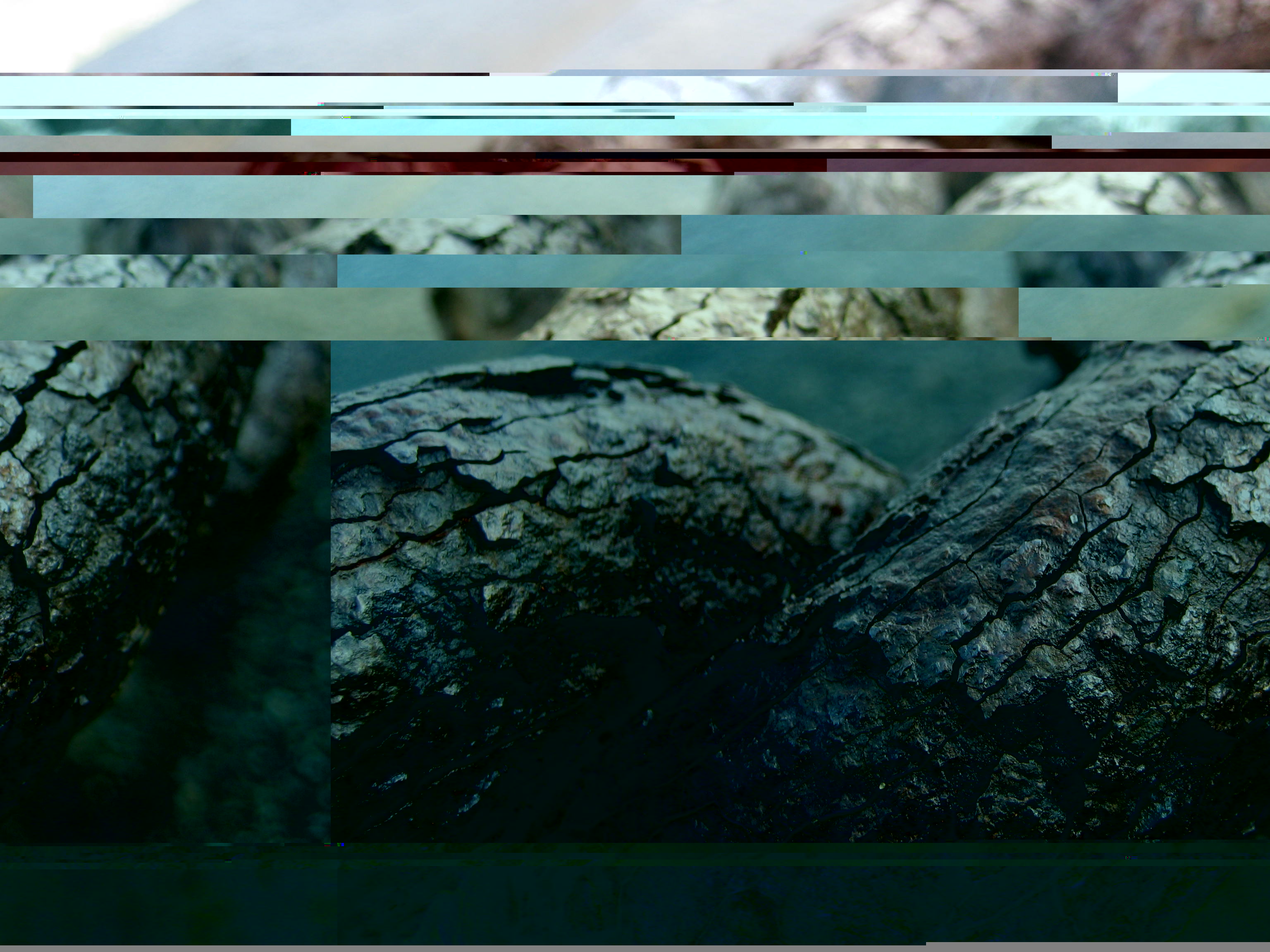
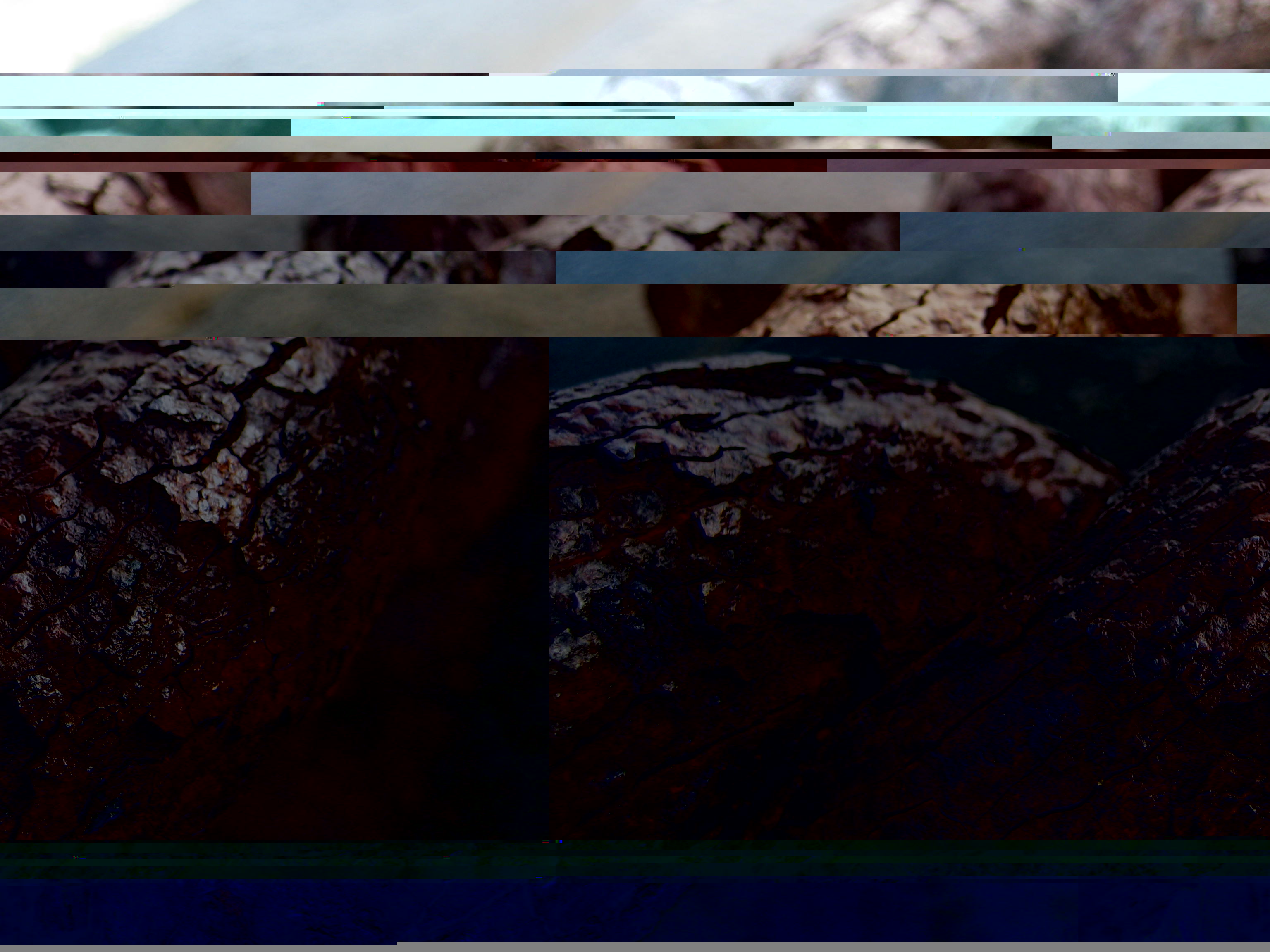
I took the Rusty Chain macro I took some time ago and databended it. I created nine different image files for each cut/paste/edit of the image’s code to show the effects of each step of data bending. Its cool stuff, almost desktop material.







Really cool custom box art
 KEVIN JAMES WONG