So, yeah… my second Global Game Jam was friggin’ awesome.
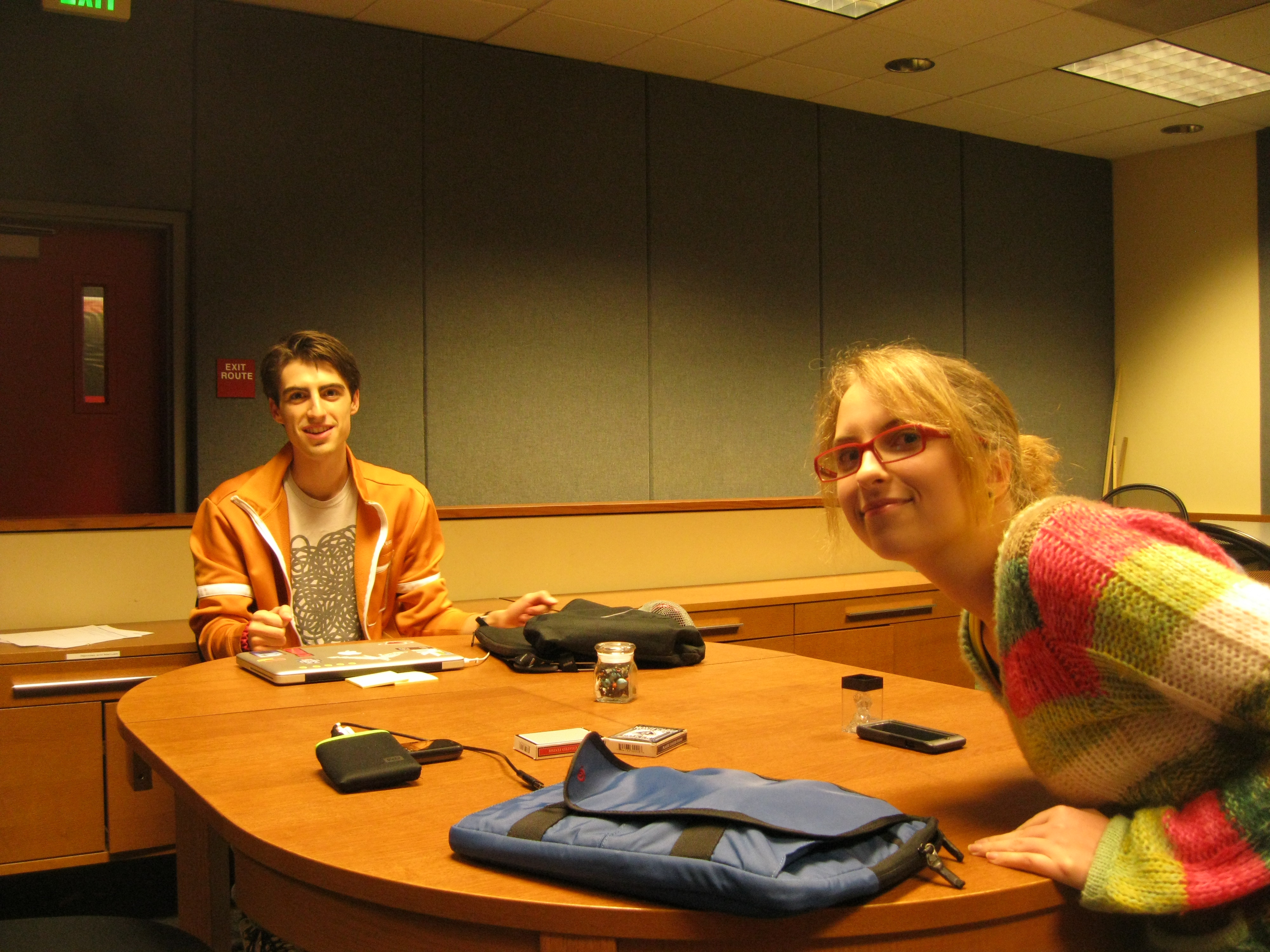
I ended up going with my friends Catherine and Esteban to prepare a game within 48 hours that would be judged by Richard Lemarchand, IMD’s visiting professor and the designer of the Uncharted series. While we had a bit of a chaotic start trying to prototype across three different platforms, things settled down once we decided to use Processing.js, the only language we all had in common. After the theme was revealed to be the sound of a beating heart, we brainstormed and settled on a rhythmic art-game based loosely off Jason Roheher’s Passage. You would play as a girl who woke up one day without a heart and would explore the world in search of it, reminiscing about her life as she encounters the things she once loved. After a prototyping phase involving sticky-notes, we went on to rapidly prototype new iterations of game systems that we would try to use in the final game. It was great and we were going to make something as emotionally moving as Passage.
Except it didn’t end up like Passage, like, not at all.
About 24 hours in, we kinda lost our minds. It was a strange pseudo-cohenrence we all existed in for a while, and for a little, the slightest suggestion at some sort of pop-culture reference would evoke raucous laughter from all of us. Out of this, the game took the name Unhearted, and ended up with all sorts of random ridiculousness. Most of which came out of our “alternate ending”, where it turned out that the girl’s heart was with Lemarchand all along.
Catherine did all the game’s fantastic art, Esteban designed the game’s engine, and I did some additional programming and dealt with the game’s sound. From this experience, I learned a bit more about coding for interactivity, working effectively in a small team, the kind of ridiculousness that comes out of our friendship, and how to get used to this kind of lifestyle.
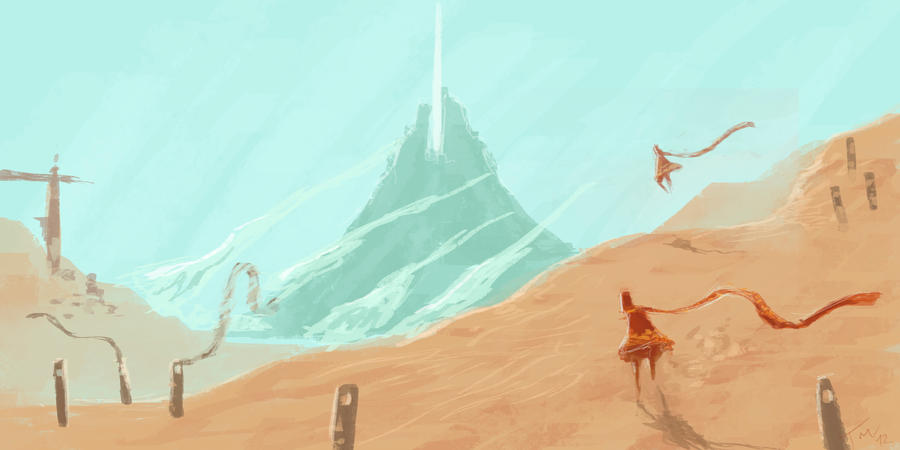
A piece of background art
And just saying, UNHEARTED is now an award winning game. We won the “Pandering the the Judge” award, which is another way of saying that we know our target audience.
Tomorrow starts one of my most anticipated weekends of the last few months: The Global Game Jam, a 48-hour game-making competition. In one chaotic and stressful weekend, impromptu game development teams come together to create small games with interesting gameplay concepts. Despite all the drama, shouting, and nerves that go on during these things, they’re one of the most important challenges that any student of game design can take up, and in a short amount of time, you can learn whole new toolsets and programming languages, discover something about yourself and how you work within a team, and bond quickly with an awesome group of creative people.
Admittedly, I am kinda nervous about tomorrow’s event and am still figuring out whether I’d want to use Unity or Game Maker, or work with a nondigital medium. I’ve done my work preparing for the stresses of tomorrow by working out, (trying) to get more sleep, and eating more vegetables, so hopefully, we’ll (whoever’s team I might end up on) make it to the finish line with something really cool to share on this site. Huzzah!
This review is spoilerific. If you intend to play this game and take in its full impact, come back later.
Spec Ops: The Line is a game about games.
If Journey was the most spiritual game I’ve ever played, Spec Ops: The Line is definitely the most intellectual. It is a self-reflexive critique of violence in video games and a demythologization of the military shooter, achieving meaning by existing as a violent video game itself. This game is in no way, shape, or form, meant to be taken as an escapist fantasy into a fantastical world, but rather as a mirror to be used for self-reflection.
Spec Ops: The Line
There are two ways to read Spec Ops: The Line: as a game, and as a metaphorical art piece. As a game, Spec Ops isn’t very good. The simple combat, while functional and smooth, feels indescribably lacking, failing to evolve over the course of the game and growing repetitive by the end of the first few levels. That said, if read as an art piece, Spec Ops’gameplay deficiencies are an integral part of its thematic and narrative meaning, making it one of the most important games of the year.
The Anti-Game
If I am to use language from my film studies class, Spec Ops: The Line can be described as a uniquely modernist shooter, exhibiting an “alternative gaming” attitude that disregards commercialization. It takes a multitude of experimental risks to ask an uneasy question of its players: “Aren’t you all a little fucked up to enjoy all this violence?”. It exists as a darkly cynical subversion of the military shooter, a critique of video-game violence, and a prompt for introspection on part of its players. Spec Ops: The Line is highly self-aware and willingly goes against the cultural norms maintained by games as a whole. There are four ways that Spec Ops conveys its message, through its fixed narrative, its visual design, its gameplay, and its subversion of player expectations.
Fixed-NarrativeSubversions
As Spec Ops’ story is surrealistic and open-ended, players will leave with their own interpretations of what happens in the game’s campaign. The game begins in media res with Captain Walker making a daring escape from a ruined Dubai whilst being chased by helicopters, a mysterious sandstorm comes out of nowhere and crashes his team’s vehicle. The game then implicitly cuts back to several hours ago, as Walker and his team are making an entrance into the ruined city to evacuate Colonel John Konrad and his 33rd Battalion, which entered the city six months ago and were never seen again.
As they explore the city, it becomes apparent that the 33rd Battalion has become an occupying force, intimidating the locals into submission. Going against pleas to bring in a third party, Walker continues into the city, under the impression that the 33rd Battalion has been exploiting the citizens, he fires white phosphorus on them. When he discovers that innocent civilians, most notably a woman and her child, were among those killed in the attack, Walker blames Konrad and swears to take revenge on those who died, dedicating his existence to bringing him to justice. Walker obtains a radio to communicate with Konrad, exchanging taunts and threats throughout the course of the game.
Combat from the early game
After a number of adventures, Walker arrives at Konrad’s tower to find him painting a scene of the white phosophorus strike. At first, Konrad seems as menacing and mysterious as he was throughout the entire game, until Walker discovers his desiccated corpse slouched on an office chair like a throne. Konrad existed only as a figment of Walker’s imagination, a traumatic hallucination to somehow scapegoat or justify the atrocities he committed and witnessed throughout the course of the game. In a fourth-wall smashing conclusion, Konrad’s projection manifests itself in front of Walker, telling him, and by extension the player, that he explicitly had the option of leaving Dubai and turning off the game, instead, he pushed on out of a misplaced desire to feel like a hero, oblivious to the abyssal gap between his intentions and the actual impact that he has on Dubai. The projection then raises a gun to Walker’s head and starts counting down. The player is then given the option to kill the projection or have Walker commit suicide.
Over the course of the game, it becomes increasingly clear that Walker is suffering from hallucinations, or in some way, the events that one sees depicted onscreen are not real. In one memorable sequence, a heavy trooper seems to teleport throughout a destroyed shop, upon being shot, the trooper vanishes, revealing that it was only a store mannequin. At times, the world flashes into a hellish, fiery landscape, Konrad’s tower giving off a menacing glow. One popular interpretation of the game is that Walker died in the initial helicopter crash in the prologue, and the events of the game represent his experience in Purgatory.
No matter your interpretation of the game’s events, it is evident that the game’s events are not realistic or intended to be perceived to be reality (whatever that means in the context of video games). Rather, the game’s narrative aims for surrealism, an irrational juxtaposition of gameplay and story to convey a message. Military shooters of all stripes aim for ultrarealism in both their graphical fidelity and their physical simulation of combat, ArmA, Call of Duty, Battlefield, the list goes on. Considering that Spec Ops goes against the grain of the shooter genre, it is subversive in both how its narrative is framed and the unreliable way that narrative is presented.
VisualSubversions The second way that Spec Ops demyths the military shooter comes out of its visual design. The game does this in two ways: in the overall surrealistic look of the game’s world and its pastiche of visual elements from other shooters.
Its Unreal.
The famous Moon scene of The Legend of Zelda: Majora’s Mask loosely resembles Spec Ops‘s ruined Dubai. Light bounces surreally off sandy cliffs thousands of feet high, lending the world an eerie, dreamlike glow. Thirty story buildings are buried underneath many tons of sand, necessitating a large number of rappels as the player descends deeper into the city. Reality and Walker’s subconscious projections continuously intermingle throughout the course of the campaign: did you see that white stag run off into the distance? Wasn’t that dead tree rife with green just a moment ago? Did the face on the billboard just change? The game’s visual surrealism accents Spec Ops‘s critique of how military shooters aspire to achieve realism.
More obvious however, is Spec Ops‘ pastiche of visual tropes common to military shooters. This is especially evident in the game’s second act as Walker approaches and ascends Konrad’s imposing tower at the center of the city. This plays off a visual trope common to works from Lord of the Rings to Half Life 2 to Journey: the hero’s Odyssey towards his ultimate goal visible in the distance, the build-up towards the final confrontation in the villain’s imposing citadel. Spec Ops upholds this visual trope by having the citadel tower over the player as a visible goal for the latter half of the game, even going so far to have the tower glow ominously like the Eye of Sauron in one hallucinatory sequence. When the player finally arrives there, this trope is subverted. There is no final battle. The nine surviving members of the 33rd Battalion line up and simply surrender Dubai to Walker. After a short elevator ride to the villain’s lair, Walker discovers that his enemy was imaginary and commits suicide. If the whole “villain’s citadel” trope is intended to build up towards a “storming the castle” moment, then Spec Ops effectively subverts this trope by removing any element of oppositional violence from this concluding sequence.
All this becomes more interesting when we consider that Spec Ops‘s final moments mockingly parody the final battle of Call of Duty: Modern Warfare 3. In Modern Warfare 3, Captain Price assaults a luxury hotel in Dubai to hunt down Makarov in hopes of avenging his friend Soap. Both of these sequences are structurally identical to each other, revolving around a confrontation with the enemy’s remaining forces in the lobby, a climactic ascent in an elevator, and an epic final clash with the enemy on the tower’s roof. Spec Ops condescendingly mocks Call of Duty by maintaining an identical visual structure but removing all the bombast.
While Modern Warfare 3‘s final sequence features a challenging shootout with the remnant’s of Makarov’s forces as they make their last stand, the remnants of Konrad’s army simply surrender to Walker. While the elevator ascent in Modern Warfare 3 featured a battle with a helicopter and a striking backdrop of Dubai, the elevator ascent in Spec Ops is brief, quiet, and uneventful. The final confrontation with the antagonist in Modern Warfare 3 ends with Price overcoming Makarov and avenging Soap, while Spec Ops ends with the Walker’s death. This derisive imitation of a successful military shooter accents Spec Ops’ condescending tone towards the genre as a whole.
GameplaySubversions
The most daring subversion the game makes comes out of the mundanity of its combat. This game gets repetitive quickly and contains gameplay warts such as respawning enemies and a dearth of weapon variety that would have been acceptable five years ago. The only gameplay evolution seen throughout the course of the campaign is a substantial escalation in the brutality of the execution moves, otherwise, Spec Ops’s gameplay stays the same throughout the entirety of its narrative. This is all done purposefully though, as it brings into question the player’s motives for playing the game. If the gunplay is repetitive and fails to evolve, what reason does the player have to continue playing except to watch increasingly grisly executions? The game’s ending proposes that Walker had eschewed the choice to leave Dubai, thereby implying that to stop playing the game midway through was a legitimate ending that players could choose.
Descending
This is where Spec Ops moves its metaphorical crosshairs from the military shooter genre to the player him/herself. If our participation in the game’s world will inevitably lead to its further destruction, what motive do we as players have to continue playing? The game does not reward continued play with new gameplay mechanics and the game’s plot grows increasingly hostile and depressing as it progresses. Why would we want to play until the end? This question is answered in Konrad’s final monologue, where he addresses the player directly: “You’re here because you wanted to feel like something you’re not: a hero”. In one elegant swoop, Spec Ops challenges our acceptance of violence in video games, going against everything that we’ve come to expect from this medium.
Subversion of PlayerExpectations
By now, it goes without saying that Spec Ops demythologizes the military shooter and questions fundamental precepts of the interactive medium. The final, and most brutal, method that Spec Ops utilizes to achieve meaning is by its subversion of player expectations. During its ad campaign, 2K and Yager attempted to depict the game as a generic military shooter, and given the game’s unfortunate title, promotional trailers, and boxart, it effectively disguises itself as a crappy knockoff of much better games. For its opening chapters, Spec Ops effectively holds this guise, the opening chapters are rife with poorly written dialogue and Walker and his crew seem to be no more than cardboard cutouts of Gears of War characters. The first few levels are intended to leave a bad impression on the player, initially leading them to question why they bought the game and why they’d continue playing in light of much better games like the aforementioned Gears. All this makes the game’s attack on the player’s motives all the more devastating.
Perhaps the most interesting scene where player expectations are subverted comes during the aforementioned white phosphorus scene. When Walker and his team are searching for a group of civilians held by the 33rd Battalion, they come across a large number of guards patrolling a courtyard. Walker finds a mortar loaded with white phosphorus rounds, and uses it to clear the area. In order to facilitate better aiming, he launches a camera into the sky and operates the mortar from a computer.
At this point, the game transitions to a black & white birds-eye view reminiscent of the AC-130 level from Call of Duty 4. Having being trained by similar games, the player is subconsciously led to want a high bodycount and feel a sense of excitement and gratification when s/he sees an explosive vehicle or a large group of enemies bunched up together to make the next victim of an aerial strike. Imagine the excitement the player would experience when he sees a group of 30-40 guys bunched up together. Trained by other games to view this as a good thing, the player pulls the trigger and fires an air strike.
Which leads to perhaps Spec Ops‘ most shocking and uncomfortable moment. That large group of “enemies” bunched up together that you saw from the bird-eye view? Those were the civilians that you were trying to liberate. The 33rd Battalion perceived you as a threat and brought them here to protect them from you. Knowing player’s expectations from the genre, Spec Ops is conscious of what players expect as positive and negative feedback, making the revelation that they just caused great harm in the game’s world that much more devastating.
What This All Means
Spec Ops is a game that anyone interested in the art-game movement should play. It is in no way, shape, or form, a happy game, and most players will come out of it feeling awful. But there’s no denying that this game is important. For a game to critique its own genre, medium, and audience shows that games have matured substantially, and Spec Ops uses the uniqueness of the interactive medium in unique and effective ways.
Physics!
My high-school theology teacher once said to me that evil appears when people and institutions fail to question themselves. While Spec Ops’ harsh indictment of such a foundational principle as simulated conflict in video games is unsettling and uncomfortable, it is necessary as video games mature. If Spec Ops, Journey, The Walking Dead, FTL,The Unfinished Swan,and Hotline Miami are a sign of things to come in gaming’s future, we’re all in for one hell of a ride.
In what appears to be an enormous upset, Journey beat out worthy competitors like Dishonored, Halo 4, Borderlands 2, and FTL to seize IGN’s game of the year award. Given the mainstream demographic the site works with, seeing Journey win this award brings me hope and joy. Its a good time to enter games.
Congratulations to Austin Wintory, Jenova Chen, and Matt Nava, as well as the entire staff of thatgamecompany, funomena, and the USC Interactive Media Division for breaking industry trends and doing groundbreaking work in the medium!
I just finished Mass Effect 3, by a large margin, the most controversial gaming release of this year. I’m tired and stressed right now due to finals preparation, but here’s a bit of incoherent rambling on it. I might come back to edit or elaborate on this later, but here are my gut reactions.
1. The combat and gunplay were sublime. I typically don’t like the straight-up action-shooter gameplay of stuff like Gears of War and Uncharted and typically get freaked out by all the intensity, but the strategies that can come out of a good squad were enthralling. Character customization was a notch above the previous game and the branching skill trees made me consistently anticipate my next level-up.
2. That said, Mass Effect had lost its soul. Mass Effect’s core mechanic lies not
This joke will never get old.
in its gunplay, but in its meaningful dialogue choices and high degree of ludonarrative dynamism. Seeing long swaths of auto-talk without any player input was jarring, seeing dialogue “trees” with only two binary choices was infuriating. In abandoning the focus on meaningful dialogue as a gameplay mechanic, the series has forgotten its essence, what made it Mass Effect.
3. This game was dark. There were a lot of sad, tear-jerking moments that I caused. Like when several characters sacrificed their lives to aid in the war effort against the Reapers and when I annihilated the entire Quarian race. The result was that I was emotionally enthralled for much of the game.
4. There was no real antagonist. Saren was great in Mass Effect, and Harbinger was wonderful in the second game. Because Mass Effect 2, especially in its DLC packs, spent a lot of time playing up Harbinger as the series’ primary antagonist. His total absence in 3 was bizarre. In his place: The Illusive Man. Who makes a very poor choice of antagonist as Cerberus represents a bit of a sideplot in the overall arc of Mass Effect 3. The player goes into the game expecting to fight against the Reapers, not Cerberus. Players want a palpable antagonist to overcome. The Illusive Man just came out of left field.
5. The backlash was kinda justified. Gamasutra published an article about the top 5 gaming controversies of 2012, and Mass Effect 3’s ending topped the list. It is for the abandonment of player choice as a central mechanic that I feel that longtime fans of the series have every right to feel betrayed by Bioware’s creative decisions.
6. What does the Extended Cut DLC mean for artistic integrity? Do consumers of art have some creative right to control the producers of the content that they consume? Do they have the right to demand a change to content that they don’t like? Is Bioware sacrificing its creative integrity by changing game-content due to fan backlash?
7. The game punishes you for playing your own way and goes against everything the RPG stands for. A central mechanic of Mass Effect is your “Effective Military Strength” score, which is increased by completing side missions and mining planets (through a repetitive and uninteresting minigame). From their tabletop roots, the central mechanic of role-playing games has been assuming the identity of your fictionalized character and playing the game your way. Mass Effect 3 cruelly mocks this tradition by punishing players who deviate from the game’s prescribed narrow narrative path. Choosing to skip the side-missions or ignore the mining minigame will result in you having a lower Effective Military Strength, leading you to a bad ending. While the game does indeed offer players an array of narrative and moral paths, it punishes those who take them. Choosing to limit player-freedom by tying role-playing to a numerical score is tasteless and stupid.
8. Garrus is the best around. This point needs no further elaboration.
9.
And thus ends my involvement with one of my favorite sci-fi universes of this console generation. Oh well, I guess I’ll just continue pining for a Firefly reboot or something like that. Maybe I’ll play The Walking Dead.
I want to try out something new with this post. I have never posted highly personal stuff about my life on any of my sites. While I started with a professional vision for this blog, I spontaneously felt the need to break from intended purpose and write about my first semester at the USC Interactive Media Division. This post may or may not be successful in achieving its goal, make what you want of it.
It was around 3 PM on March 29th, 2012.
I was in my Honors Physics class working on a crappy egg-drop contraption. Will Campbell, student body president, who was supposed to be in the library for his free period, comes in uninvited and says “Kevin, you should probably check your Facebook”.
I assumed that it was probably some embarrassing status or picture that I was mistakenly tagged in, no big deal and certainly not worth dragging my laptop out of its case to check. Against better reason, I did. It was a wall-write from my brother, “you got accepted to USC game program! congrats! its like getting into the hunger games!”
What… the… hell… happened…
I knew that I wanted to go to USC’s Interactive Media Division more than anything else in the world, I would be satisfied going to no other school.
I knew that it was the most competitive game design program in the world and, having heard that only fifteen students were admitted a year, I was doubtful of my chances. While I invested the most work into my USC application, years of middling grades and a passion for nothing else but games and cross country made me believe that the application was nothing but a throwaway, a one-in-a-million chance thing I was doing just for fun. But somehow, through some alignment of fate, I found myself at the doorstep of a dream that I had sought for the last two years.
I went to a small school, and rumors and stories spread like wildfire. That week, I think I was congratulated by practically everyone at my high school. “Shit man, you’re on your way to great things.” one guy said, giving me a strong pat on my back. “Dude, that’s beyond words.” said another, “Congrats!”, “Congratulations Kevin!” shouted a throng of girls as they passed me by.
For a good while, I sat on cloud nine. It took some time for me to finally believe that what I was feeling was real. When reality hit me, it hit forcefully.
I got good financial aid from my other schools. Rochester Institute of Technology offered me a $12000 a year scholarship, Drexel, $15000, Renasselaer Polytechnic, $15600. I received nothing from USC. To go to USC would be to turn down up to $64000 in awards and aid. I questioned myself strongly, was joining IMD worth it? Would I be doing my family a huge disservice by placing upon them a great financial burden? An unprecedented opportunity sat before me, but to take it, I would have had to make a sacrifice.
Going against what reason told me, I took the plunge. I registered, submitted my deposit and let fate take its course.
My metaphysical and religious beliefs are complicated to the point that even I don’t understand them. I’m not entirely sure if I believe or don’t believe in there being anything “out there”. But since I took this path, I have detected some subtle change in how I perceive the world around me. Its hard to qualify exactly, but I am somehow more optimistic, more grateful of those around me and what they’ve brought to my life, more attentive to the subtle impacts that my choices have on the world around me. Maybe there’s some force out there that has placed good things and bad things in my life that have led me to where I am now. Maybe I was destined for this. Whatever it is, its beyond my comprehension.
SHAKING OFF STAGNATION
Fast forward several months, Subtle Stone, a game studio I founded, dissolves, Dark Deception fails, my (awesome) codeveloper Bard returns to Norway to become a priest, I suffer through a lazy summer and watch my creativity atrophy.
August 23rd arrives, I’ve been waiting for this day for a while and have been eager to meet the people of the division, hosting a movie night to watch Indie Game in my apartment. I was introduced to the Reality Ends Here alternate reality game and had a good
The Dark Deception Project
time creating small interactive and visual projects, including one screenplay, two nondigital games, and two short films.
Yet, I was despondent. I needed to be working on something big. Dark Deception gave me something to live for in the last months of high school, it gave me purpose. I believed it was the very foundation of my soul and identity in high-school, I was “the guy behind Dark Deception”, I dedicated everything I had to the project and named it in my head as “my life’s purpose”. The inevitable failure of the project shook me to my core, and for a while, I felt my time at USC was purposeless. I needed Subtle Stone. I was frustrated and spent copious amounts of time dreaming of the day that the old team would be reunited and Dark Deception reborn. For the first seven or so weeks I was afflicted with this dispassion.
I like books, I have a bunch of them stacked high on my dorm room table. Among them was my high-school yearbook. One day, I picked it up for a read, having not done so before. People had left many warm messages of gratitude and affection in it, and knowing these people, I knew that those messages were sincere. Then I noticed something, while there were messages commending me for courage, creativity, and drive, not one mentioned Subtle Stone or Dark Deception. The love that I received from my family and friends was not centered around what I did, but who I was. My narrow-sighted preoccupation over Dark Deception had somehow warped my perception of the world around me.
It was a realization that hit with gravity and sank in deep: Subtle Stone was not my fate. I would probably never make Dark Deception, and it wasn’t worth sacrificing my humanity to create. Maybe letting go of a dream that has consumed you whole isn’t such a bad thing. I was not destined to be Subtle Stone, I was destined to live as a member of IMD.
Maybe judging the success of my existence in this world on basis of the success of Dark Deception was misguided from the start. Gatsby paid a harsh price for living for a single dream, maybe I averted the same fate.
ADVENTURES
A few days later, my opportunity to do something exciting came. We have this secret
Reality Ends Here Cards used to prompt creative projects
Facebook group for IMD students called “The Settlers of CTIN” (CTIN being the course prefix for Interactive Media classes), and one day, in the middle of 400, a group message sparks within the group. I’m not the only itching to create something it turned out, the other people in the program were thirsting to create a game. We decided to meet together and we assembled a great team. We ended up trying to assemble a cooperative first-person stealth game built in Unity. While our meetings have been somewhat disjointed due to other commitments by team members, I have set my personal goal for this project to create a team that sticks together for years and lasts beyond college.
There’s a certain, palpable giddiness about the people of IMD that bleeds forth into everything they do. These people love what they do. They know their purpose in life and live their dreams with pride.
at Zocalo Public Square
There’s Esteban Fajardo, whose giddy excitement about games inspires us all. There’s Catherine Fox, whose courageous honesty exhibits a quiet strength. And Chloe Lister, whose snarky and abrasive sense of humor has never failed to make me laugh. Trevor Dietz is practically a fountainhead of awesome ideas. There are still many others in this great group of people that I wish to connect more with, and I am truly honored to work amongst them. Everyone I’ve met here has friggin’ amazing taste in games and pop culture, and in the short time I’ve spent here, I’ve been introduced to awesome things such as Firefly, Cards Against Humanity, Dungeons & Dragons, Jak & Daxter, Frog Fractions, alternate reality games, Super Hexagon, the list goes on.
Journey was somehow important to us all
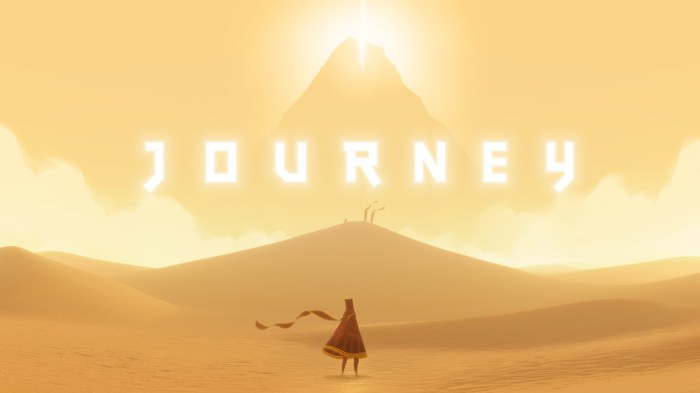
One thing that practically everyone I’ve met from IMD has in common is a veneration of Journey. Maybe its because thatgamecompany is comprised mostly out of IMD alumni, but for one reason or another, this game has touched each of us spiritually and has united us around a common emotional experience. For us, it provided an example of what we could potentially do with our work in games: each of us had the potential to create games that could have remarkable positive impact on our players.
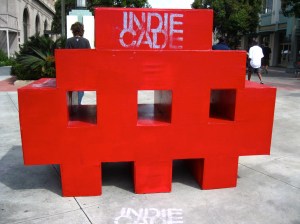
And then there was Indiecade, oh wow, a lot happened there. There, I met such inspirational people like John Romero, Brenda Braithwaithe, and the entire cast of Indie Game: The Movie, as well as Davey Wredren and some old friends from UC Santa Cruz. I’m just gonna share a highlight.
So I went to Indiecade as a volunteer, and I was assigned to the Sony tent to work as a bouncer, sending people who didn’t have passes off on their merry way. All was going well and I did not need to bounce very many people. Then a young, Asian man in a sky-blue jacket came up to the tent.
IndieCade
“Excuse me sir, do you have a pass for this event?”
“um, I’m just here to sign books.” he said,
Then an electrifying realization surged through my body.
“Oh…” I said, “um, by any chance are you Jenova Chen?”
“Uh, yeah,” he said, “I actually have to move my car right now…”
and with that, he left. I’ve been a fan of Jenova’s work for years now and have been itching to meet him for a long time. I’ve never read an interview of his that I didn’t like and was inspired by his studio’s dream, so much that I wrote about his work in my application essay. Most of the people in the film school dreamed of meeting inspirational figures like George Lucas, Steven Spielberg, or Robert Zemeckis. I had met my inspirational figure, and I bounced him.
Crap.
ONWARDS!
I use Gmail’s Priority Inbox, and sometimes miss out on important emails when they get forwarded into the wrong folder. Before he left, I sent my old codeveloper Bard an email containing copy of the Humble Indie Bundle 5 and a kind message thanking him for his work and what a honor it was to work with him. He responded to my message, but it got forwarded to the wrong inbox, and as a result, I was not able to read it until a few weeks ago when I was doing a periodic cleanup.
Thank you so incredibly much for having me on your team this year! It has been an honor working with a pioneer like yourself, and I have learned so much that I wouldn’t have learned otherwise… I truly believe that you will find amazing contacts your next four years that you can work with to increase your knowledge and drive for video games. I will always be proud of the fact that I have worked by your side. It has been an incredible adventure. If you ever lose your belief in yourself, you should know that I won’t: you are exactly what this world needs!
God bless you!
Bard Magnus Soedal
I’m probably never going to work with Subtle Stone again and Dark Deception might never come to fruition, but I’m totally okay with that. Lao Tzu wrote in the Tao Te Ching that “Those who rush ahead don’t get very far. Those why try to outshine others dim their own light. Those who call themselves righteous can’t know how wrong they are. Those who boast of their accomplishments achieve nothing.” I guess that’s one thing that I’ve learned the full value of through my experience this semester.
My first semester with IMD had ended just a few hours ago when I started writing this post, and life is hopeful. The “One Street Corner” project that I did for the Reality Ends Here ARG with Caroline, a good friend of mine from Production, had just won the award for “Most Inspirational”. My time has come, these will be the best years of my life, and with a killer group of friends tied together by a common destiny, I find myself on the first steps of another great journey.