These are my gut reactions to the XBox One press conference. Forgive me if I can’t predict the future.
People predict that this next console cycle will be the last of its kind due to the proliferation of alternative distribution methods like Steam and iOS, and that might be true with the advent of cloud computing. Outsourcing the number-crunching to powerful remote servers and having the console act only as a client for playing these games means that the only upgrades that need to be made are to those remote servers, nullifying the need to upgrade every few years. I’m excited.
Square box with sharp edges. Bleh.
That said, I can’t help but be incredibly disappointed at this morning’s XBox One reveal. Aside from its ugly design that would have been acceptable only in the early 2000s, the preoccupation with television other traditional forms of entertainment sets it up for failure. Fewer and fewer people are watching television and prefer to catch series through channels like iTunes, Youtube, and Netflix, formats that suit our increasingly busy lives and schedules. I mean, consider a number of my friends from film school, most of their goals don’t lie in theaters or TV screens, but in web series and internet video. To focus on traditional, centralized methods of media production sets us back. In essence, the XBox One is just trying to be an uglier DVR, while it is nice to have a centralized place to access all our entertainment options, I think we’re missing the point here.
Which brings us to games.
Aside from cloud computing’s power to advance the big-budget AAA games, it would seem that indies will be the deciding factor for who wins the so-called “console war”.
Let’s back up a bit, previous generations were never decided by console specs, they were decided by price and exclusives. Consider the Wii’s $250 launch price and the casual revolution that it started, and compare it to the PS3’s incredible processing power locked away behind system architecture so problematic that the 360 ended up consistently getting the best version of a multiplatform game. Point is, the complexity and power of a console isn’t going to make too much of a difference in how this console cycle plays out.
Furthermore, another change owes itself to the “Ludus Florentis” phenomenon that I pointed out in my previous post. Consumers are beginning to get tired of the big-budget AAA games, and instead of dropping $60 on a highly anticipated blockbuster, people are beginning to prefer to put that same money to purchase a variety of downloadable games, the success of Journey, Far Cry 3: Blood Dragon, and The Walking Dead prove this. Simply put, its not the console that has access to the most anticipated exclusives that will dominate this next generation, but the one that has the strongest indie-outreach program and online storefront.
Nintendo and Sony both recognized this change and made aggressive pushes to their plans for downloadable games. Sony made their massive indie kick by reformatting their storefront and adopting a familiar PC-like architecture for the PS4, as well as completely eliminating their developer registration fee. Nintendo made theirs by releasing the HTML5 based Nintendo Web Framework for the WiiU and opening up their submission process. As a result, the registration and development process for these consoles will be comparable to what already exists with Desura or the App Store, which can only mean good things for the diversity of games that will exist on these platforms. The XBox One’s preoccupation with the Call of Dutys and EA Sports of the world will probably make them increasingly irrelevant as the cycle plays out, which is disappointing, considering the wealth of great indie games like Bastion that owe their existence to XNA this generation.
Technology!
But more than anything else, what concerns me about this next generation are development costs. Both press conferences in the past few months marketed incredible graphical fidelity, pushing amazing texture resolution and ridiculous polycounts for each model in a game’s world.
This’ll mean bad things for games.
Art assets are one of the most time and resource consuming components of game development, already, asset production is outsourced to outside studios for many AAA games. Increasing the graphical fidelity of each asset in a 3D game world will only continue to bloat development costs and increase the level of damage done to a studio should a project fail.
Furthermore, games seem to market “emotional storytelling and characterization” with the graphical fidelity of these games. Strangely enough, “emotional” seems to have become a new buzzword in the odd era that we exist in at this moment.
But graphics don’t mean anything for emotional resonance.
The Walking Dead
Games are games, and achieve their meaning through play. The scarf-restoring cuddling and momentary escape from gravity connected to each jump in Journey made it such a compelling experience. The narrative weight lent to each dialogue option in the low-fi Walking Dead made one of the most emotionally intense games I’ve ever played. Graphical beauty didn’t make these games emotionally powerful, great ludic design did.
If anything, I’m intrigued by what this next console generation has to offer. Ludus Florentis opened up Steam, mobile, and cloud-based games to an unprecedentedly wide audience and diversified the kinds of games that could exist and succeed. The effects of what happened in these alternative spheres will mean a lot to how this next generation plays out.
This is a reflection about my first year at game school. Its long and reflective, deal with it.
I try not to have second thoughts about entering this industry. We’re riding the wave of Ludus Florentis, the massive sea change, maybe even movement, that James Portnow predicted three years ago, a term that I’ll refer to a lot in this article.
While as a player of games, I welcome the earthquake of creativity that is shaking up the industry right now, I remain concerned about what that could mean for my career. Right now, more people than ever are entering the game industry, and the old guards of yesterday can not possibly employ all that talent that’s flooding out of game schools. Independent developers like the ones I admire seldom look to hire or expand, and the few ones that do rarely seek applicants in design. As the bar to entry lowers, the bar to be competitive inches higher.
Chelsea Howe’s diagram of the factors that contribute to “Ludus Florentis”, a phrase that I’ll use here to describe what’s going on right now in gaming.
To be competitive in this world means to make necessary sacrifices, everyone is going to give up a little bit of themselves. I personally, ended my political outspokenness and stopped distance running, two facets of myself that I thought important to who I was. In retrospect, the former won’t be missed and the latter was mooted anyway by life in Los Angeles.
Nonetheless, anyone entering game school can expect to work harder than they ever have in their life. They must expect movement, and must be ready to relocate to get the necessary experience that would fulfill their goals. And challenge, those entering this industry must be ready to confront the stark reality of crunch time, demographic homogenity, limited compensation, family separation, the crossover of social and professional life, and a brief career likely lasting less than a decade.
But that’s barely an issue.
Maybe I’m being overly idealistic or something like it. To be part of this snapshot of time means that I’m part of a greater whole, and only with the combined creativity of game developers everywhere will we unlock a grand future. Being part of the microcosm of USC Games means that I am intrinsically part of this movement, and that the person I form myself to be in this moment in time will determine the direction of this movement and what the medium will become in the future.
What happened over the course of my first year at game school has sent me on a journey of my own (sorry), while I’m far from that designer that I want to be, I’ve already met strange new people from walks of life radically different from my own, I’ve traveled to the conventions and met the visionaries of the medium that I only dreamed of years ago, I’ve joined and worked on projects continually pushing the boundaries of what games could be and what they can do for the world.
And Things Got Strange.
By stepping into unknown territory, I opened myself to the risk of failure. But the finite nature of our existence, and the infinite nature of the unknown, moots success or failure in any professional domain. What really matters are our relationships to the people who are closest to us with whom we share our brief journey through this wilderness. ~ Jeff Watson
I worked on the next iteration of my 2012 game of the year, Reality Ends Here. A message went out that Jeff Watson was opening up an experimental class to design future iterations of the ARG, having received a grant to expand the game that had changed many a freshman’s life, connecting them to the friends they would paint the future with. I joined the team as a narrative designer, and was in charge of designing an overarching environmental narrative to create the atmosphere of subversive, self-motivated creativity that the future of entertainment demands from its practitioners.
A typical Reality Ends Here dev meeting.
Most of the details about what exactly we did to next year’s iteration of Reality Ends Here has to be kept under wraps, because, hey, spoilers, but I will say that working on it reminded me of the necessary constraints that time, manpower, and budget placed on these projects. When we began designing the narrative, we had this grand vision of an epic participatory story involving immersive theater, hundreds of audio-logs, story-rich spaces, fictional characters, and a simulated conflict. We ended up cutting out most of that content to only that which would maintain our laser focus on creating the desirable atmosphere of discovery and excitement that we want to provide to our players. Film school is a rabbit hole taking those who choose to explore it to strange lands of magic and adventure, we want to reinforce that aesthetic with this narrative.
I have great hope for Reality Ends Here. We made a huge number of fundamental changes to the game and expect to see the payoff in the quality of students that partake in this school. And given my knowledge of some of the plans we have for the game, Reality Ends Here may end up making some great difference in the world as a whole. Keep an eye out for us.
And Even Stranger.
Around the afternoon of March 28th, I received a phone call from my friend Esteban.
“Hey Kevin, wanna come up to GDC with us?”
“Uh, sure, I guess…”
“Great, meet us at New/North in an hour.”
So began an impromptu road trip.
We took the Highway 1 to San Francisco, the grand road running along the California coast. To our right lay rocky, grass-covered cliffsides hundreds of feet tall, to the right, the setting sun shimmered off the gold-tinted ocean, painting the sky an incredible orange-pink. A few hours later, we were in the grassy farmlands of the Central Valley, I reclined in my seat to look out the window, and saw stars brighter than anything I’ve ever seen.
I was born and raised in San Francisco, city lights and fog would drown out any sight of the night sky. To see hundreds of glittering specks in the sky and ponder the vastness of the universe was a strangely cathartic experience that I could never have in the city.
The road trip up to GDC, oddly moving.
I knew that GDC took place in San Francisco annually for several years by now, and as much as I wanted to go, even if only to meet people on the other side of development, restrictions caused by age and school would always prevent me from doing so, and frustratedly, I would watch the online coverage of the events and talks that were occurring only a few miles away. When I finally arrived to the crowded convention floor, I took a moment to take in the sights and sounds of the conference: hundreds of booths from every conceivable gaming company in the world, renowned visionaries like Ian Bogost, Robin Hunicke, and Keita Takahashi scuttled around the Moscone Center, and facial hair.
Sony made an incredible indie push at this year’s GDC.
And yet, something was different. An ecstatic energy pervaded the hundreds of developers at the conference, as if they were anticipating something huge to happen.
Evolution was in the air, everywhere you’d go, there were symptoms of the nascent renaissance. You’d see it in Chris Hecker’s wordless GDC rant, you’d see it at the crowdedness of this year’s Experimental Gameplay Workshop, you’d see it in the pervasive frustration over gender exclusivity at the major talks. Nowhere was this more obvious than at the GDC Awards, of the 14 available categories, only two were won by AAA games, and at the IGF, a poverty-simulator named Cart Life by Richard Hofmeier won Grand Prize. Being around for the Friday of the conference, I was surprised to see that the keynote speakers at the Game Career Workshop weren’t business executives for major publishers giving advice on how to get hired, but independent developers like Robert Boyd or Anna Anthropy.
The indie presence at GDC has been around for years, and while Ludus Florentis has been brewing in the waters a while now, I can’t help but think that something massive happened this year at GDC. We’ve moved down that metaphorical junction point, all that’s left to do now is to continue. All I have to say is that I’m grateful to be part of this moment.
Final Games.
After GDC, I returned to USC and joined a final game called Proving Grounds as a community manager. Given my experience dealing with blogs, Twitter feeds, and Facebook pages for projects in the past, I decided that I would make my most useful contributions doing community management for the project. Proving Grounds was an isometric action game focusing on emergent uses of the environment to resolve combat situations. Vines, explosive barrels, unstable floors, breakable walls, hanging lanterns and wires could all be used in combination with each other to damage enemies, and the relative weakness of the player’s avatar would force creative use of the environment, making survival a battle of wits rather than numbers, channeling almost a Shadow of the Colossus-esque aesthetic. My job, make sure that the world recognizes the game as a unique and creative project.
Pitchin’
Proving Grounds was part of the Final Games sequence, which could be summed up as a microcosmic simulation of the game industry as a whole. Advanced Games students would assemble teams to prototype a game, build an audience, and pitch it to a panel of professors and industry professionals. Of the 17 or so games that were pitched, only seven were selected. Only by passing the extremely competitive pitch sequence would a project get greenlighted to be developed, the goal: exhibition at major festivals, creating the very best student games in the world. Two games from last year’s sequence got major attention, Core Overload and Scrapyard were picked up by Intel and exhibited at their booth at GDC 2013. The Unfinished Swan and fl0wboth owe their genesis to similar processes at USC.
All was going smoothly, I brought some great people onto the team, and each of the teams on the project worked incredibly efficiently. I connected with the community manager of thatgamecompany for advice on how to effectively create a public aesthetic around the game and effectively convey our vision to the world. Pitch day arrived, and the team’s producer and director put out a stellar presentation selling our vision for the game effectively. Things seemed to be going well, and while each of the 17 games that were pitched were unique and innovative in their own right, I was pretty optimistic in our chances of being selected.
The Unfinished Swan owes its genesis to a similar program at USC Interactive.
But we weren’t chosen. The team disbanded and the project was shut down, the constituent members of the Proving Grounds team split up and joined the seven accepted projects, the process of which to join had grown substantially more competitive, requiring interviews and resumes of prospective contributors. Disappointment pervaded as I saw a number of very interesting projects like The Kingdom Cold vanish with their rejection from Final Games.
I ended up with a project codenamed Maestros, an experimental real-time strategy game directed by a number of undergraduates, the first of its kind at USC Games. I again, was brought on as a community manager, fitting for this kind of project, as Maestros sought to create a competitive scene inspired by e-sports, and effective community management would be critical to the game’s success.
Camaraderie.
Oddly enough, I spent most of this semester sick. A nasty case of pnumonia that affected me over the course of four months, which I’m still currently shaking off. I think it might be in part stress-induced, but that doesn’t matter. Antibiotics yo.
But I owe a lot to my friends for getting me through this. When I stubbornly held onto the notion that I’d be fine and my sickness would pass, they persuaded me to see a doctor. When I was too sick to leave the dorm for a week, they brought me soup and medicine. On the many weekends where I was too weak to do anything outside, they kept me company and hanged out with me. I think we blew through the entirety of Avatar: The Last Airbender in a number of marathonic sittings (probably one of the best animated shows I’ve ever seen). But for that, my awesome friends, I thank you all.
at the 5D conference
When I was strong enough to get out of the dorm for a weekend, I ended up at the 5D worldbuilding conference with my good friends Catherine and Esteban, a SCA-sponsored event utilizing collaborative imagination to project the future given different sociopolitical, economic, and environmental circumstances. Our job at this conference was to create a fictional world in a day, a 2020 Los Angeles informed by the success of the Occupy Wall Street movement, the replacement of snaking highways with miles of elevated rails, and a substantial rise in ocean levels. On our team was Jenova Chen.
Yes, that Jenova Chen. Through all the interviews I read with him, I finally got to see his leadership style in person, forceful and direct and more than willing to redirect the entire conversation towards a different, more interesting direction. Working with the wonderful Richard Lemarchand and a number of upperclassmen from IMD, we built a wildly detailed and imaginative vision of a realistic future. Certainly one of the more unusual and interesting weekends of the year.
Aside from that, I’ve found myself doing an incredible number of things with some awesome friends. I’ve competed at the 2013 Global Game Jam, watched The Who in concert at LA Live, met Nolan Bushnell -the father of digital gaming, as well as Louis Zamperini -a personal hero of mine, attended a screening of Scott Pilgrim vs. The World with the cast and director, danced to experimental interactive digital installation artwork, got an article published on Gamasutra, set out plans for an innovative new gaming channel, and unsuccessfully attempted to crash a virtual world’s economy.
I had an idea for a photobombing game. This is us prototyping it.
Ludus Florentis.
Maybe this is the best time in history to enter gaming. A confluence of bold new ideas, and a consumer base hungry for something different welcomes an incredible disruption to preconceived notions of what the game industry represents. The big ships of today are beginning to reach over to academia, game jam, and the indie communities, indicating that having the most open, accessible platform will determine the outcome of the next console cycle, which will mean only incredible good for our medium. Being part of an incredible community at USC Games, I live amongst the friends, mentors, and infections energy that will enact that change we wish to see in the world.
Richard Lemarchand referred to our present moment as a “ludic renaissance” at a division meeting. Self-centered concerns about this career aside, I can’t wait to see the outcome of this chapter in history.
I’m going to spoil a lot of Bioshock Infinite for all of you, so beware this blog post if you’re planning on playing this game.
Bioshock Infinite is a game about a lot of things.
Bioshock Infinite
Religious zealotry, American Exceptionalism, theories of space-time and interdimensionality, patriotic jingoism, the inevitability of economic disparity, Occupy Wall Street, colonialism, and problems faced by political radicalism. While few of these plot threads arrive at a productive conclusion, it piques interest, causes uncanny discomfort, and provokes conversation and interpretation within its colorful fan community.
However, my view on the meaning of Bioshock Infinite, which has conflicted with the interpretations of the many friends that I have discussed the game with, involves a subtle level of self-reflexivity that I saw pervading the game’s entirety. Bioshock Infinite is about the nature of narrative in games and the conflicts between emergent and fixed narrative, returning to the conflicts between ludology and narratology that had died down years ago.
Before we begin, let’s go over some key terms necessary to understanding this argument, not everyone is a game designer. Emergent narratives are unscripted stories that come out of a game’s play, they may include dramatic character arcs in The Sims, and alternate histories created by Civilization V matches. Fixed narratives are stories determined by the game designer, and are most prominent in single-player narrative games such as Bioshock Infinite.
Constants and Variables: Emergent and Fixed Narrative
Single-player games like Jak and Daxter are comprised of both fixed and emergent narrative elements. Fixed narrative in these games amounts to preset moments that occur between or during moments of gameplay, and may manifest themselves as cutscenes, background chatter, or narration. Games like these are also comprised of emergent scenes, which can vary wildly depending on player choice. Game narrative is not entirely dictated by the author, and exists as a strange amalgam of both embedded and emergent narrative. Game writers do not have complete control over how a game’s story will play out due to the nature of interactivity and player behavior. Even a single-player narrative game like Half-Life 2 can have an infinite number of narrative permutations dependent on how players approach combat and exploration sequences.
Which is a topic Bioshock Infinite addresses in its brilliant, mind-bending ending. Booker and Elizabeth escape Columbia through an interdimensional portal into the Sea of Lighthouses, a mysterious world beyond the constraints of time and space where every possible permutation of the universe at any possible time in history can be accessed through an infinite number of doors. “There are a million, million worlds. All different and all similar. Constants and variables. There’s always a lighthouse, there’s always a man, there’s always a city… Sometimes something’s different… yet… the same.” says Elizabeth.
This scene is soaked with metacommentary about the distinction and conflicts between embedded and emergent narrative. Everyone who plays Bioshock Infinite will be telling a different story in their playthrough. Combat situations will play out differently depending on player strategies, Booker may or may not find all the collectible upgrades in Columbia, he may spend hours playing carnival games at the fair, he may ride the carousel in Soldier’s Field, and he may scour every trash can in Columbia for food. These are the “variables” that Elizabeth is talking about, the “million, million worlds” that are all different and the same, Bioshock Infinite‘s story is comprised of an infinite number of permutations coming out of the game’s emergent nature.
Decision time!
And yet, the rich range of narrative permutations that come out of interactivity is mooted by authorial intent and traditional narrative. Bird or Cage, ride the carousel or ignore it, fight with guns or Vigors, Bioshock Infinite‘s overarching narrative will always play out the same way regardless of player choice. All this is reinforced by the game’s single ending. While many games try to make player choice meaningful by providing a variety of outcomes based on player’s participation in the story, Infinite mocks the idea by making players powerless over the progression and ultimate outcome of the game’s plot. These are “constants”, the elements of a game narrative that are “always the same”.
The Illusion of Meaningful Choice
Bioshock Infinite is peppered with moments where players have to make a split-second binary choice, such as a decision to threaten or press a ticket seller, and the decision between two different brooches for Elizabeth. While most games like Mass Effect and Heavy Rain hinge upon these moments as an integral part of their branching storytelling, these moments in Bioshock Infinite make no meaningful difference to the overall outcome of the plot.
Games are characterized by having quantifiable and variable outcomes, and player choice in gameplay dictates these outcomes, leading to meaningful play. Bioshock Infinite challenges the notion that binary choice is meaningful by making its choices meaningless, that is, if meaningful choice is to be defined as a choice that influences the game’s outcome. The first Bioshock had a rudimentary morality system where player’s choices in dealing with Little Sisters influenced the plot’s variable conclusion and marketed this system as an integral part of the game’s appeal. Infinite subverts player expectations by making these “moral choice” moments irrelevant to the outcome of the campaign, at most, leading to a minor cosmetic difference on a character or two.
One of the “decision-time” scenes
The artificiality and insignificance of these moments reinforces the notion that Bioshock Infinite is about the conflicts between player-generated and designer-dictated narrative and the diametrical opposition between ludology and narratology. Players are led by prior experiences with similar games to think that these binary choices matter with respect to the game’s narrative, and by subverting these expectations by making these choices almost irrelevant to the game’s conclusion, Bioshock Infinite raises questions about whether or not truly meaningful choice can really exist within a designer-driven narrative.
Does Autonomy Exist in Narrative Games?
The Lutece “twins”, the memorable and quirky duo of scientists lost everywhere in spacetime, provide perhaps the most thought provoking insight on game narrative in Bioshock Infinite. The Luteces are fourth-dimensional beings, and simultaneously exist in all places, at all times, in every possible universe. Adam Sessler of the fantastic Rev3Games channel likened them to Rosencrantz and Guildenstern for their self-referential nature on the nature of fate and free will. This is fitting given their role in the game’s narrative.
Tom Stoppard’s play Rosencrantz and Guildenstern are Dead retells the story of Hamlet from the perspective of minor characters. The play deals with whether or not free will can exist within the world of a play, amongst other meta-things. The titular characters, doomed to die in the original Shakespeare play, attempt to defy their fate by escaping to England in one scene, but are rendered incapable of doing so by virtue of existing in a world dictated by an omniscient, godlike playwright. Video games are said to break from this problem by having the player enact the narrative by assuming the role of a character, thereby imposing free will into a universe traditionally thought to be dictated by an author. Bioshock Infinite challenges this idea in an early scene.
Upon arriving in Columbia, Booker encounters the twins blocking a doorway. They walk up to him and give him a coin, “heads, or tails”, they ask. Booker flips it, calling heads, and it lands on heads, like it did for the last 122 times.
Bioshock Infinite’s coin-flip scene is not a “decision-time” scene
In Rosencrantz and Guildenstern, a similar scene occurs where a coin lands on heads 92 times in a row. This leads the characters to wonder if they are under the control of a supernatural force. In real life, coin flips are determined entirely by random chance, and exist as a fair and impartial way of making binary decisions. This cannot exist within the constraints of a work of fiction, even computers at a machine level are incapable of simulating randomness. The coin-flip scene in Bioshock Infinite is not determined by random chance, and is scripted by the developers to always land on heads.
What this means is that autonomy and procedurally generated narrative cannot exist within a narrative game like Bioshock Infinite no matter how hard developers attempt to give the illusion of an open-ended narrative. The coin-flip scene represented an ideal point to give the player the decision of calling heads or tails, but Booker is scripted to always call heads. This is done purposefully, as removing player autonomy from this scene tells us it is impossible for a game with scripted elements to be truly player-driven.
This notion of the impossibility of autonomy in single-player narrative games is reinforced immediately after the player regains control over Booker. The Luteces walk to the side and open the doorway for Booker to proceed and stand there. If the player stays near them, Rosalind will tell the player to leave several times before saying “If you don’t go, I’ll be forced to start repeating myself.”, after which, she does.
Rosencrantz and Guildenstern are Dead
This interactive scene is a prod at the artificiality of NPC’s in video games, and despite attempts at creating rich and realistic characters in fiction, characters are ultimately fictional constructs created by authors devoid of autonomy and drive. Lutece is scripted to repeat the same limited number of prerecorded lines until the player inevitably leaves the area and continues the game. Despite the fact that players regain control Booker in this scene, it is impossible for players to do anything but proceed down Infinite‘s narrative path.
Look past Freudian interpretations, and this play has interesting things to say on free will.
BioshockInfinite‘s themes of the illusion of free will extend from the artificiality of NPCs to the very nature of interactivity later on in the game. In the game’s final sequence, Booker finds himself reliving the moment he sold his daughter to repay his debt. Booker tries to resist, and players, disgusted at this grim realization, will too. “You can wait as long as you want, eventually you’re going to give him what he wants. You don’t leave this room until you do.” says Elizabeth. At this point, the only option available to the player is to pick up the baby and hand it over to the man at the door, players cannot fight back or escape the room. Players will inevitably surrender the baby, since they cannot progress until they do. Both Booker, and the player, are rendered incapable of making any other decision by the very nature of Bioshock Infinite‘s method of storytelling. Aside from surrendering the baby after waiting for an indefinite time, the only other option available to the player is to quit the game.
So is Booker an autonomous being, or is he controlled by an omniscient force called the Player? Perhaps the question being raised here is whether players are autonomous beings or simply actors controlled by the invisible hand of game design. The interactive nature of the medium would suggest that players are truly autonomous and capable of making rational decisions that influence the world of the game, but all this is an illusion. It is impossible for true, meaningful autonomy to exist in a single-player narrative game because the authored nature of fiction prohibits players from making choices outside of the ones that a game’s system allows.
Heavy Meta
Its totally possible that I’m reading way too deep into Bioshock Infinite. However, even if my interpretation of the game strays far from predominant interpretations of Infinite, the questions raised by multiverse theory, the illusion of meaningful choice, and the myth of autonomy in single-player games raises interesting questions about the nature of video game storytelling. Just like how Rosencrantz and Guildenstern raises questions about the nature of fictional worlds dictated by authors, Bioshock Infinite raises questions about universes collaboratively authored by both designers and players.
Are we reaching the point where graphics can get no better? The visual leap between console generations is far subtler than in previous cycles. Adding polygons for each notch in a character’s skin and every strand of his hair is going to make AAA games more time-consuming to do.
Will the need for more sophisticated visuals in games drive up development costs and increase the size of development teams? This will ultimately reduce the number of AAA games that succeed and lead to studio closures and cancelled projects.
Here’s hoping that Sony continues to do its great work in the alt-indie space by supporting devs like Quantic Dream, Giant Sparrow, and thatgamecompany.
Its hard to get excited about hardware right now when in only a year or two consumer PCs will have similar hardware at a fraction of the price. For me, the main draw to console gaming is the social experience of vegging out on a couch with friends in front of a huge screen.
Smart call removing used games restrictions. Bad call removing backwards compatibility. I don’t want to rebuy my games over PSN.
Cloud gaming is overrated, especially for people in areas with slow internet service. Slow internet will effectively shut out a huge number of people from the next generation.
I sure hope the submission process for PSN Indie Games is simple and that the API for developing games is simple and easy to learn. Microsoft did a huge favor for the world by encouraging indie game development with XNA, Sony should consider doing to same.
Maybe Nintendo was right seven years ago when they said that we’re eventually going to reach a point where increased processing power can no longer account for new gameplay experiences. I mean, many of the best games of last year had minimalistic graphics, The Walking Dead, The Unfinished Swan, Journey.Minecraft has weak technical graphics and its already one of the best games out there. I played a bit of Far Cry 3 and felt that it focused too much on spectacle.
Here’s one for new interfaces like motion, touch, and virtual reality.
I haven’t seen any game at the conference that I can get really excited about. Destiny looks kinda cool from an artistic perspective and I’ve adored Bungie’s visual direction, but I can’t really get into the whole “pervasive transmedia-franchise” thing. Time will tell. What I do wish was there at the conference was The Last Guardian, since that dog-goat-eagle thing is friggin’ adorable. Watch Dogs also looks fantastic.
What about support for 3D visuals or 4K resolution? Jumping from 480p to 1080p was a huge visual jump and meant a lot for how impactful games can be. Staying at 1080p seems like a missed opportunity.
Wondering what gameplay experiences the touchpad on PS4 can create. Touch is an incredibly powerful interface and accounted for the success of the DS and modern mobile gaming. If its used in an interesting and creative way, huge potential for great new experiences can be tapped.
People say that this eighth console cycle might be the last. Given how much movement exists with in the industry, the contracting scale of AAA development, and all the new forms of games that we’ve seen over the past few years, that’s probably going to be true. Don’t be sad over this, an exciting new future is about to be built. Be hopeful.
This is actually the most incredible piece of technology I’ve ever seen. Its incredible how they squeezed such incredible machinery into such a tiny device.
One thing that has sat on my bucket list for a while is to give a TED Talk. If I were to do one, it would be on video games and how awesome they are and why everyone should at least care about them.
I think that after the casual revolution that came around 2006, video games have infiltrated the public consciousness and stayed there. Add the proliferation of iOS and Facebook games, then everybody’s a gamer. I don’t want to get into the whole “Are Games Art?” argument here, since that argument was already settled decades ago, and any further attempts at justification in this day amounts to nothing more than self-aggrandization Instead, I just want to say that I love games.
Darfur is Dying
Games give us empathy, they allow us to share the experience of another individual by simulating their identities and lives. By actually experiencing the struggles of another person through interactivity, we can comprehend how other people experience the world more intimately than in any other medium. For one, Darfur is Dyingallowed players to understand the crises facing those affected by the Darfur genocide, tasking them with protecting their family from insurgents and managing the limited resources of a refugee camp, risking their own lives to get something as simple as water. Anna Anthropy’s Dys4ia shared the experience of being a transgendered person in contemporary society with its players, a kind of life that I, a young, straight, privileged, male, cannot naturally relate to. Yet, through interactivity, this alien experience can become relatable and understandable, and as a result, we can empathize with people whose lives are radically different from our own.
When teaching about the Holocaust, most schools go to Elie Wiesel’s Night or Anne Frank’s diary to allow students to observe the dehumanizing effects of oppression. If we were to take students out of the role of a passive observer of someone else’s story, and instead place them in the shoes of a Holocaust survivor in a simulated reality, imagine how much closer to home the messages of these stories would hit. Games have aspired to become more emotionally involving in recent years by asking players to make increasingly difficult ethical decisions in their virtual worlds. Perhaps asking players to sympathize with the victims of unimaginable oppression would be a step in a bold new direction for such a movement. If anything, such a game, if done artfully and tastefully, could instill understanding and sympathy within its players.
Games become even more interesting when we consider them as an interactive storytelling medium. By letting our own identities bleed into those of our in-game avatars, as in Mass Effect and Skyrim, we become more intimately attached to the stories that we can create through our participation in a game’s world. Already, games such as Half Life and Bioshock have exploited the perks of an interactive, explorable, medium by using virtual environments to tell immersive stories with rich, imaginative, universes. Things get even more interesting when you approach more experimental games, Spec Ops: The Line self-reflexively questions our enjoyment of violent video games through its subversion of gaming tropes. Journey abstractly touches hearts using a subtle, unspoken language transcendent of cultural boundaries. As a narrative and artistic medium, gaming becomes increasingly hard to ignore.
Pokemon
Looking beyond the potential of games to let us empathize with others, games most importantly serve as a social framework through which relationship can be made. Over a decade ago, Pokemon served as a social framework that united us all, and despite our diverse backgrounds and peripheral interests, most kids in my third grade class had a common interest in Pokemon. We would discuss the teams that we had assembled during recess, surreptitiously sneak our Game Boys to school to make trades, and be envious of the one kid who had that Shiny Zigzagoon. Ask any gamer you may meet, and s/he will recall fond memories of elementary school and the friends that they made playing it. Games unite disparate people, their play serves as a common language through which we bond with each other. Chess leagues, FPS clans, DnD groups, ARG communities, nerdy fandoms, MMO guilds, athletic teams, political parties, games have done an immense social good by allowing us to form authentic relationships with each other and become part of a larger community. If to belong to something greater than oneself is a fundamental human need, then games serve this purpose admirably.
Which is why the reignited controversy over violent video games perturbs me. While I welcome an impartial study on the effects of violent games, the inflammatory accusationsthat I see from pundits are disturbing. I owe myself to games: they were my childhood and their play served as a fundamental building block to my character. In the brief time that I have spent on the side of the developer, my affinity for the medium has only grown. Being part of the USC Interactive Media Division, I stand at the very edge of a rapidly expanding universe, and the future for the medium that I see being constructed by my friends, mentors, and colleagues thrills and inspires me.
Indiecade
I see that future in Reality Ends Here, a pervasive alternate-reality game that has facilitated collaboration and creativity in the students at the School of Cinematic Arts. I see that future in Project Holodeck, a experimental, motion-controlled, virtual-reality interface for playing games. I saw a lot of that future at IndieCade, a festival to celebrate the creativity of independent games. We stand at the dawn of an incredible new age for games, and a vast uncharted future stands in front of us, to step towards a broader, richer, world of games is both thrilling and terrifying, to step back out of unfounded fear of the unknown would be a disservice to the world.
So, yeah… my second Global Game Jam was friggin’ awesome.
I ended up going with my friends Catherine and Esteban to prepare a game within 48 hours that would be judged by Richard Lemarchand, IMD’s visiting professor and the designer of the Uncharted series. While we had a bit of a chaotic start trying to prototype across three different platforms, things settled down once we decided to use Processing.js, the only language we all had in common. After the theme was revealed to be the sound of a beating heart, we brainstormed and settled on a rhythmic art-game based loosely off Jason Roheher’s Passage. You would play as a girl who woke up one day without a heart and would explore the world in search of it, reminiscing about her life as she encounters the things she once loved. After a prototyping phase involving sticky-notes, we went on to rapidly prototype new iterations of game systems that we would try to use in the final game. It was great and we were going to make something as emotionally moving as Passage.
Except it didn’t end up like Passage, like, not at all.
About 24 hours in, we kinda lost our minds. It was a strange pseudo-cohenrence we all existed in for a while, and for a little, the slightest suggestion at some sort of pop-culture reference would evoke raucous laughter from all of us. Out of this, the game took the name Unhearted, and ended up with all sorts of random ridiculousness. Most of which came out of our “alternate ending”, where it turned out that the girl’s heart was with Lemarchand all along.
Catherine did all the game’s fantastic art, Esteban designed the game’s engine, and I did some additional programming and dealt with the game’s sound. From this experience, I learned a bit more about coding for interactivity, working effectively in a small team, the kind of ridiculousness that comes out of our friendship, and how to get used to this kind of lifestyle.
A piece of background art
And just saying, UNHEARTED is now an award winning game. We won the “Pandering the the Judge” award, which is another way of saying that we know our target audience.
This review is spoilerific. If you intend to play this game and take in its full impact, come back later.
Spec Ops: The Line is a game about games.
If Journey was the most spiritual game I’ve ever played, Spec Ops: The Line is definitely the most intellectual. It is a self-reflexive critique of violence in video games and a demythologization of the military shooter, achieving meaning by existing as a violent video game itself. This game is in no way, shape, or form, meant to be taken as an escapist fantasy into a fantastical world, but rather as a mirror to be used for self-reflection.
Spec Ops: The Line
There are two ways to read Spec Ops: The Line: as a game, and as a metaphorical art piece. As a game, Spec Ops isn’t very good. The simple combat, while functional and smooth, feels indescribably lacking, failing to evolve over the course of the game and growing repetitive by the end of the first few levels. That said, if read as an art piece, Spec Ops’gameplay deficiencies are an integral part of its thematic and narrative meaning, making it one of the most important games of the year.
The Anti-Game
If I am to use language from my film studies class, Spec Ops: The Line can be described as a uniquely modernist shooter, exhibiting an “alternative gaming” attitude that disregards commercialization. It takes a multitude of experimental risks to ask an uneasy question of its players: “Aren’t you all a little fucked up to enjoy all this violence?”. It exists as a darkly cynical subversion of the military shooter, a critique of video-game violence, and a prompt for introspection on part of its players. Spec Ops: The Line is highly self-aware and willingly goes against the cultural norms maintained by games as a whole. There are four ways that Spec Ops conveys its message, through its fixed narrative, its visual design, its gameplay, and its subversion of player expectations.
Fixed-NarrativeSubversions
As Spec Ops’ story is surrealistic and open-ended, players will leave with their own interpretations of what happens in the game’s campaign. The game begins in media res with Captain Walker making a daring escape from a ruined Dubai whilst being chased by helicopters, a mysterious sandstorm comes out of nowhere and crashes his team’s vehicle. The game then implicitly cuts back to several hours ago, as Walker and his team are making an entrance into the ruined city to evacuate Colonel John Konrad and his 33rd Battalion, which entered the city six months ago and were never seen again.
As they explore the city, it becomes apparent that the 33rd Battalion has become an occupying force, intimidating the locals into submission. Going against pleas to bring in a third party, Walker continues into the city, under the impression that the 33rd Battalion has been exploiting the citizens, he fires white phosphorus on them. When he discovers that innocent civilians, most notably a woman and her child, were among those killed in the attack, Walker blames Konrad and swears to take revenge on those who died, dedicating his existence to bringing him to justice. Walker obtains a radio to communicate with Konrad, exchanging taunts and threats throughout the course of the game.
Combat from the early game
After a number of adventures, Walker arrives at Konrad’s tower to find him painting a scene of the white phosophorus strike. At first, Konrad seems as menacing and mysterious as he was throughout the entire game, until Walker discovers his desiccated corpse slouched on an office chair like a throne. Konrad existed only as a figment of Walker’s imagination, a traumatic hallucination to somehow scapegoat or justify the atrocities he committed and witnessed throughout the course of the game. In a fourth-wall smashing conclusion, Konrad’s projection manifests itself in front of Walker, telling him, and by extension the player, that he explicitly had the option of leaving Dubai and turning off the game, instead, he pushed on out of a misplaced desire to feel like a hero, oblivious to the abyssal gap between his intentions and the actual impact that he has on Dubai. The projection then raises a gun to Walker’s head and starts counting down. The player is then given the option to kill the projection or have Walker commit suicide.
Over the course of the game, it becomes increasingly clear that Walker is suffering from hallucinations, or in some way, the events that one sees depicted onscreen are not real. In one memorable sequence, a heavy trooper seems to teleport throughout a destroyed shop, upon being shot, the trooper vanishes, revealing that it was only a store mannequin. At times, the world flashes into a hellish, fiery landscape, Konrad’s tower giving off a menacing glow. One popular interpretation of the game is that Walker died in the initial helicopter crash in the prologue, and the events of the game represent his experience in Purgatory.
No matter your interpretation of the game’s events, it is evident that the game’s events are not realistic or intended to be perceived to be reality (whatever that means in the context of video games). Rather, the game’s narrative aims for surrealism, an irrational juxtaposition of gameplay and story to convey a message. Military shooters of all stripes aim for ultrarealism in both their graphical fidelity and their physical simulation of combat, ArmA, Call of Duty, Battlefield, the list goes on. Considering that Spec Ops goes against the grain of the shooter genre, it is subversive in both how its narrative is framed and the unreliable way that narrative is presented.
VisualSubversions The second way that Spec Ops demyths the military shooter comes out of its visual design. The game does this in two ways: in the overall surrealistic look of the game’s world and its pastiche of visual elements from other shooters.
Its Unreal.
The famous Moon scene of The Legend of Zelda: Majora’s Mask loosely resembles Spec Ops‘s ruined Dubai. Light bounces surreally off sandy cliffs thousands of feet high, lending the world an eerie, dreamlike glow. Thirty story buildings are buried underneath many tons of sand, necessitating a large number of rappels as the player descends deeper into the city. Reality and Walker’s subconscious projections continuously intermingle throughout the course of the campaign: did you see that white stag run off into the distance? Wasn’t that dead tree rife with green just a moment ago? Did the face on the billboard just change? The game’s visual surrealism accents Spec Ops‘s critique of how military shooters aspire to achieve realism.
More obvious however, is Spec Ops‘ pastiche of visual tropes common to military shooters. This is especially evident in the game’s second act as Walker approaches and ascends Konrad’s imposing tower at the center of the city. This plays off a visual trope common to works from Lord of the Rings to Half Life 2 to Journey: the hero’s Odyssey towards his ultimate goal visible in the distance, the build-up towards the final confrontation in the villain’s imposing citadel. Spec Ops upholds this visual trope by having the citadel tower over the player as a visible goal for the latter half of the game, even going so far to have the tower glow ominously like the Eye of Sauron in one hallucinatory sequence. When the player finally arrives there, this trope is subverted. There is no final battle. The nine surviving members of the 33rd Battalion line up and simply surrender Dubai to Walker. After a short elevator ride to the villain’s lair, Walker discovers that his enemy was imaginary and commits suicide. If the whole “villain’s citadel” trope is intended to build up towards a “storming the castle” moment, then Spec Ops effectively subverts this trope by removing any element of oppositional violence from this concluding sequence.
All this becomes more interesting when we consider that Spec Ops‘s final moments mockingly parody the final battle of Call of Duty: Modern Warfare 3. In Modern Warfare 3, Captain Price assaults a luxury hotel in Dubai to hunt down Makarov in hopes of avenging his friend Soap. Both of these sequences are structurally identical to each other, revolving around a confrontation with the enemy’s remaining forces in the lobby, a climactic ascent in an elevator, and an epic final clash with the enemy on the tower’s roof. Spec Ops condescendingly mocks Call of Duty by maintaining an identical visual structure but removing all the bombast.
While Modern Warfare 3‘s final sequence features a challenging shootout with the remnant’s of Makarov’s forces as they make their last stand, the remnants of Konrad’s army simply surrender to Walker. While the elevator ascent in Modern Warfare 3 featured a battle with a helicopter and a striking backdrop of Dubai, the elevator ascent in Spec Ops is brief, quiet, and uneventful. The final confrontation with the antagonist in Modern Warfare 3 ends with Price overcoming Makarov and avenging Soap, while Spec Ops ends with the Walker’s death. This derisive imitation of a successful military shooter accents Spec Ops’ condescending tone towards the genre as a whole.
GameplaySubversions
The most daring subversion the game makes comes out of the mundanity of its combat. This game gets repetitive quickly and contains gameplay warts such as respawning enemies and a dearth of weapon variety that would have been acceptable five years ago. The only gameplay evolution seen throughout the course of the campaign is a substantial escalation in the brutality of the execution moves, otherwise, Spec Ops’s gameplay stays the same throughout the entirety of its narrative. This is all done purposefully though, as it brings into question the player’s motives for playing the game. If the gunplay is repetitive and fails to evolve, what reason does the player have to continue playing except to watch increasingly grisly executions? The game’s ending proposes that Walker had eschewed the choice to leave Dubai, thereby implying that to stop playing the game midway through was a legitimate ending that players could choose.
Descending
This is where Spec Ops moves its metaphorical crosshairs from the military shooter genre to the player him/herself. If our participation in the game’s world will inevitably lead to its further destruction, what motive do we as players have to continue playing? The game does not reward continued play with new gameplay mechanics and the game’s plot grows increasingly hostile and depressing as it progresses. Why would we want to play until the end? This question is answered in Konrad’s final monologue, where he addresses the player directly: “You’re here because you wanted to feel like something you’re not: a hero”. In one elegant swoop, Spec Ops challenges our acceptance of violence in video games, going against everything that we’ve come to expect from this medium.
Subversion of PlayerExpectations
By now, it goes without saying that Spec Ops demythologizes the military shooter and questions fundamental precepts of the interactive medium. The final, and most brutal, method that Spec Ops utilizes to achieve meaning is by its subversion of player expectations. During its ad campaign, 2K and Yager attempted to depict the game as a generic military shooter, and given the game’s unfortunate title, promotional trailers, and boxart, it effectively disguises itself as a crappy knockoff of much better games. For its opening chapters, Spec Ops effectively holds this guise, the opening chapters are rife with poorly written dialogue and Walker and his crew seem to be no more than cardboard cutouts of Gears of War characters. The first few levels are intended to leave a bad impression on the player, initially leading them to question why they bought the game and why they’d continue playing in light of much better games like the aforementioned Gears. All this makes the game’s attack on the player’s motives all the more devastating.
Perhaps the most interesting scene where player expectations are subverted comes during the aforementioned white phosphorus scene. When Walker and his team are searching for a group of civilians held by the 33rd Battalion, they come across a large number of guards patrolling a courtyard. Walker finds a mortar loaded with white phosphorus rounds, and uses it to clear the area. In order to facilitate better aiming, he launches a camera into the sky and operates the mortar from a computer.
At this point, the game transitions to a black & white birds-eye view reminiscent of the AC-130 level from Call of Duty 4. Having being trained by similar games, the player is subconsciously led to want a high bodycount and feel a sense of excitement and gratification when s/he sees an explosive vehicle or a large group of enemies bunched up together to make the next victim of an aerial strike. Imagine the excitement the player would experience when he sees a group of 30-40 guys bunched up together. Trained by other games to view this as a good thing, the player pulls the trigger and fires an air strike.
Which leads to perhaps Spec Ops‘ most shocking and uncomfortable moment. That large group of “enemies” bunched up together that you saw from the bird-eye view? Those were the civilians that you were trying to liberate. The 33rd Battalion perceived you as a threat and brought them here to protect them from you. Knowing player’s expectations from the genre, Spec Ops is conscious of what players expect as positive and negative feedback, making the revelation that they just caused great harm in the game’s world that much more devastating.
What This All Means
Spec Ops is a game that anyone interested in the art-game movement should play. It is in no way, shape, or form, a happy game, and most players will come out of it feeling awful. But there’s no denying that this game is important. For a game to critique its own genre, medium, and audience shows that games have matured substantially, and Spec Ops uses the uniqueness of the interactive medium in unique and effective ways.
Physics!
My high-school theology teacher once said to me that evil appears when people and institutions fail to question themselves. While Spec Ops’ harsh indictment of such a foundational principle as simulated conflict in video games is unsettling and uncomfortable, it is necessary as video games mature. If Spec Ops, Journey, The Walking Dead, FTL,The Unfinished Swan,and Hotline Miami are a sign of things to come in gaming’s future, we’re all in for one hell of a ride.
I want to try out something new with this post. I have never posted highly personal stuff about my life on any of my sites. While I started with a professional vision for this blog, I spontaneously felt the need to break from intended purpose and write about my first semester at the USC Interactive Media Division. This post may or may not be successful in achieving its goal, make what you want of it.
It was around 3 PM on March 29th, 2012.
I was in my Honors Physics class working on a crappy egg-drop contraption. Will Campbell, student body president, who was supposed to be in the library for his free period, comes in uninvited and says “Kevin, you should probably check your Facebook”.
I assumed that it was probably some embarrassing status or picture that I was mistakenly tagged in, no big deal and certainly not worth dragging my laptop out of its case to check. Against better reason, I did. It was a wall-write from my brother, “you got accepted to USC game program! congrats! its like getting into the hunger games!”
What… the… hell… happened…
I knew that I wanted to go to USC’s Interactive Media Division more than anything else in the world, I would be satisfied going to no other school.
I knew that it was the most competitive game design program in the world and, having heard that only fifteen students were admitted a year, I was doubtful of my chances. While I invested the most work into my USC application, years of middling grades and a passion for nothing else but games and cross country made me believe that the application was nothing but a throwaway, a one-in-a-million chance thing I was doing just for fun. But somehow, through some alignment of fate, I found myself at the doorstep of a dream that I had sought for the last two years.
I went to a small school, and rumors and stories spread like wildfire. That week, I think I was congratulated by practically everyone at my high school. “Shit man, you’re on your way to great things.” one guy said, giving me a strong pat on my back. “Dude, that’s beyond words.” said another, “Congrats!”, “Congratulations Kevin!” shouted a throng of girls as they passed me by.
For a good while, I sat on cloud nine. It took some time for me to finally believe that what I was feeling was real. When reality hit me, it hit forcefully.
I got good financial aid from my other schools. Rochester Institute of Technology offered me a $12000 a year scholarship, Drexel, $15000, Renasselaer Polytechnic, $15600. I received nothing from USC. To go to USC would be to turn down up to $64000 in awards and aid. I questioned myself strongly, was joining IMD worth it? Would I be doing my family a huge disservice by placing upon them a great financial burden? An unprecedented opportunity sat before me, but to take it, I would have had to make a sacrifice.
Going against what reason told me, I took the plunge. I registered, submitted my deposit and let fate take its course.
My metaphysical and religious beliefs are complicated to the point that even I don’t understand them. I’m not entirely sure if I believe or don’t believe in there being anything “out there”. But since I took this path, I have detected some subtle change in how I perceive the world around me. Its hard to qualify exactly, but I am somehow more optimistic, more grateful of those around me and what they’ve brought to my life, more attentive to the subtle impacts that my choices have on the world around me. Maybe there’s some force out there that has placed good things and bad things in my life that have led me to where I am now. Maybe I was destined for this. Whatever it is, its beyond my comprehension.
SHAKING OFF STAGNATION
Fast forward several months, Subtle Stone, a game studio I founded, dissolves, Dark Deception fails, my (awesome) codeveloper Bard returns to Norway to become a priest, I suffer through a lazy summer and watch my creativity atrophy.
August 23rd arrives, I’ve been waiting for this day for a while and have been eager to meet the people of the division, hosting a movie night to watch Indie Game in my apartment. I was introduced to the Reality Ends Here alternate reality game and had a good
The Dark Deception Project
time creating small interactive and visual projects, including one screenplay, two nondigital games, and two short films.
Yet, I was despondent. I needed to be working on something big. Dark Deception gave me something to live for in the last months of high school, it gave me purpose. I believed it was the very foundation of my soul and identity in high-school, I was “the guy behind Dark Deception”, I dedicated everything I had to the project and named it in my head as “my life’s purpose”. The inevitable failure of the project shook me to my core, and for a while, I felt my time at USC was purposeless. I needed Subtle Stone. I was frustrated and spent copious amounts of time dreaming of the day that the old team would be reunited and Dark Deception reborn. For the first seven or so weeks I was afflicted with this dispassion.
I like books, I have a bunch of them stacked high on my dorm room table. Among them was my high-school yearbook. One day, I picked it up for a read, having not done so before. People had left many warm messages of gratitude and affection in it, and knowing these people, I knew that those messages were sincere. Then I noticed something, while there were messages commending me for courage, creativity, and drive, not one mentioned Subtle Stone or Dark Deception. The love that I received from my family and friends was not centered around what I did, but who I was. My narrow-sighted preoccupation over Dark Deception had somehow warped my perception of the world around me.
It was a realization that hit with gravity and sank in deep: Subtle Stone was not my fate. I would probably never make Dark Deception, and it wasn’t worth sacrificing my humanity to create. Maybe letting go of a dream that has consumed you whole isn’t such a bad thing. I was not destined to be Subtle Stone, I was destined to live as a member of IMD.
Maybe judging the success of my existence in this world on basis of the success of Dark Deception was misguided from the start. Gatsby paid a harsh price for living for a single dream, maybe I averted the same fate.
ADVENTURES
A few days later, my opportunity to do something exciting came. We have this secret
Reality Ends Here Cards used to prompt creative projects
Facebook group for IMD students called “The Settlers of CTIN” (CTIN being the course prefix for Interactive Media classes), and one day, in the middle of 400, a group message sparks within the group. I’m not the only itching to create something it turned out, the other people in the program were thirsting to create a game. We decided to meet together and we assembled a great team. We ended up trying to assemble a cooperative first-person stealth game built in Unity. While our meetings have been somewhat disjointed due to other commitments by team members, I have set my personal goal for this project to create a team that sticks together for years and lasts beyond college.
There’s a certain, palpable giddiness about the people of IMD that bleeds forth into everything they do. These people love what they do. They know their purpose in life and live their dreams with pride.
at Zocalo Public Square
There’s Esteban Fajardo, whose giddy excitement about games inspires us all. There’s Catherine Fox, whose courageous honesty exhibits a quiet strength. And Chloe Lister, whose snarky and abrasive sense of humor has never failed to make me laugh. Trevor Dietz is practically a fountainhead of awesome ideas. There are still many others in this great group of people that I wish to connect more with, and I am truly honored to work amongst them. Everyone I’ve met here has friggin’ amazing taste in games and pop culture, and in the short time I’ve spent here, I’ve been introduced to awesome things such as Firefly, Cards Against Humanity, Dungeons & Dragons, Jak & Daxter, Frog Fractions, alternate reality games, Super Hexagon, the list goes on.
Journey was somehow important to us all
One thing that practically everyone I’ve met from IMD has in common is a veneration of Journey. Maybe its because thatgamecompany is comprised mostly out of IMD alumni, but for one reason or another, this game has touched each of us spiritually and has united us around a common emotional experience. For us, it provided an example of what we could potentially do with our work in games: each of us had the potential to create games that could have remarkable positive impact on our players.
And then there was Indiecade, oh wow, a lot happened there. There, I met such inspirational people like John Romero, Brenda Braithwaithe, and the entire cast of Indie Game: The Movie, as well as Davey Wredren and some old friends from UC Santa Cruz. I’m just gonna share a highlight.
So I went to Indiecade as a volunteer, and I was assigned to the Sony tent to work as a bouncer, sending people who didn’t have passes off on their merry way. All was going well and I did not need to bounce very many people. Then a young, Asian man in a sky-blue jacket came up to the tent.
IndieCade
“Excuse me sir, do you have a pass for this event?”
“um, I’m just here to sign books.” he said,
Then an electrifying realization surged through my body.
“Oh…” I said, “um, by any chance are you Jenova Chen?”
“Uh, yeah,” he said, “I actually have to move my car right now…”
and with that, he left. I’ve been a fan of Jenova’s work for years now and have been itching to meet him for a long time. I’ve never read an interview of his that I didn’t like and was inspired by his studio’s dream, so much that I wrote about his work in my application essay. Most of the people in the film school dreamed of meeting inspirational figures like George Lucas, Steven Spielberg, or Robert Zemeckis. I had met my inspirational figure, and I bounced him.
Crap.
ONWARDS!
I use Gmail’s Priority Inbox, and sometimes miss out on important emails when they get forwarded into the wrong folder. Before he left, I sent my old codeveloper Bard an email containing copy of the Humble Indie Bundle 5 and a kind message thanking him for his work and what a honor it was to work with him. He responded to my message, but it got forwarded to the wrong inbox, and as a result, I was not able to read it until a few weeks ago when I was doing a periodic cleanup.
Thank you so incredibly much for having me on your team this year! It has been an honor working with a pioneer like yourself, and I have learned so much that I wouldn’t have learned otherwise… I truly believe that you will find amazing contacts your next four years that you can work with to increase your knowledge and drive for video games. I will always be proud of the fact that I have worked by your side. It has been an incredible adventure. If you ever lose your belief in yourself, you should know that I won’t: you are exactly what this world needs!
God bless you!
Bard Magnus Soedal
I’m probably never going to work with Subtle Stone again and Dark Deception might never come to fruition, but I’m totally okay with that. Lao Tzu wrote in the Tao Te Ching that “Those who rush ahead don’t get very far. Those why try to outshine others dim their own light. Those who call themselves righteous can’t know how wrong they are. Those who boast of their accomplishments achieve nothing.” I guess that’s one thing that I’ve learned the full value of through my experience this semester.
My first semester with IMD had ended just a few hours ago when I started writing this post, and life is hopeful. The “One Street Corner” project that I did for the Reality Ends Here ARG with Caroline, a good friend of mine from Production, had just won the award for “Most Inspirational”. My time has come, these will be the best years of my life, and with a killer group of friends tied together by a common destiny, I find myself on the first steps of another great journey.
I usually do a “Year in Review” post each year around Christmas Eve where I reflect on games that I have played and name a personal game of the year. In celebration of the successful funding of LA Game Space, I am publishing this blog post early.
My taste in gaming has changed substantially over the past year, I am no longer satisfied by epic narrative experiences and find myself seeking out brief, esoteric, and quirky interactive experiences that I’ll never forget. On my previous site, I wrote “Year in Review” posts where I would reflect and wax poetic on games that I’ve played and pick out a game as my personal game of the year. This year’s post will be a little different as it will include more nondigital and alternate reality games, giving us a broader range of experiences to discuss. My criteria for selecting games has also changed, and the games that I am about to discuss don’t necessarily fall under the umbrella of “fun”, but under that of “impactful”.
Games That I’ve Played
For the sake of readability, I won’t write about the games I played at the Global Game Jam, but will just say that Chelsea Howe’s To What End is totally worth the five minutes it takes to play.
I started the year off by playing both the Legend of Zelda: Skyward Sword and The Elder Scrolls V: Skyrim. Both games were smartly done. While I felt that Skyward Sword suffered from a poorly paced introduction and midsection, I took note that the Impressionistic art style suited the spirit of the series perfectly and thatthe game’s motion controls finally made good on Nintendo’s original promise to create a game based around true 1:1 motion swordplay, and in many ways, it was the best motion-controlled traditional game that I’ve ever played. Skyrim was brilliant in it inspiring breadth, while narratively it sucked and there were a great many things that broke my immersion into it’s fantastic world, I was consistently driven to adventure for eighty hours with my Nord character Pixels. Alas, I eventually got bored raiding dungeons and hunting for improved loot, and went on a murderous rampage in Riften leaving much of the town’s population in pieces.
Journey
Then Journey entered my life.
This is the part where I sit at my keyboard and stare at my screen, not quite knowing what to put down to post. In many ways, Journey has become an important McGuffin in my life. I first played it days before I was accepted into USC’s Interactive Media Division and my life changed forever, I discussed it at length with my codevelopers at Subtle Stone before we separated for good, I played it to meditate before I left for college, and when I arrived at IMD, I discovered that it touched and inspired the souls of the colleagues that I was about to share my career with. Somehow, we had gathered around Journey collectively as an experience that had shaped, defined, and moved our infantile career in gaming.
But yes, Journey was something special. It touched my soul and shook my very being by speaking in a universal language transcendent of cultural boundaries. Play it.
After Journey I played Bastion. If I could find a word to describe this game, it would be luscious. Its rich coloration and enthralling music captivated me, its fluid combat and simple character customization was fun as hell. Most intriguing was Bastion’s narrator, Rucks, whose grizzled voice is as memorable to me as Morgan Freeman’s or Liam Neeson’s. His narration contributed much to Bastion’s emotional overtone, and I found myself invested in the story and found the ending to be clever in its self-reflexivity.
Up next was Superbrothers: Sword and Sworcery EP. I played this game on my laptop, and missed out on a lot of the tablet & touch exclusive features. While I didn’t quite like the game’s puzzles and found them at times illogical and strange, its aesthetics and ambitions appealed to me. Give this game a try if you’re into the esoteric.
I liked Dear Esther, and you have every right to call me pretentious, but you know that that’s not true. It didn’t strike me that the island was a manifestation of the protagonist’s subconscious until the very end, but that made the second playthrough much sweeter. It reminded me much of Inception, it’s a brainy game that will make you think and dig deep into your intellect.
Dear Esther
Itching for a shooter, I downloaded Crysis to my Playstation 3 and enjoyed how the first few levels encouraged creative ways to deal with combat situations. It was unique, fun, and reminiscent of the original Far Cry, one of my favorite shooters out there. Alas, when aliens were introduced, the game became far more generic, linear, and unfun.
I Arrive at USC & Meet IMD
IMD 2016, The Settlers of CTIN, The Unnamed Game Development Group, The Indie Circlejerk. I have met no group of people quite like my colleagues in my undergraduate class at the USC Interactive Media Division. Their drive, ability, initiative, creativity, kind-heartedness, and courage are above and beyond anything I’ve ever seen, they’re both good as developers, but even better as people. It is both an honor and a joy to work amongst them for these short few years, if not for the rest of my career. They’ve already done a lot by introducing me to a few games, surprisingly, nondigital ones.
SCA 2016
Two of the first folks I met from IMD got me into Dungeons and Dragons, having loved computer role-playing games like KOTOR, Fallout, and Chrono Trigger, it was necessary to discover where these games got their roots. When I signed up to join them one Friday night for DnD, I had no idea what I was getting into. The game’s ability to collectively pool the imaginations of a diverse group of people, bond them closely together, and leave them with inside jokes galore is astounding. I was a schizophrenic, dark-skinned rogue named Pixels with long purple hair and a goatee, and the situations that I have plunged my party into will stay with me for some while. Situations like rolling a critical miss on a disarm device check and nearly killing half my party. This game has brought together my adventuring party, and we’ve played many things together outside of DnD, like Uncharted 3 and the Jak & Daxter trilogy.
Speaking of which, what was the deal with that ship scene in Uncharted 3? C’mon, seriously.
Shortly thereafter, I was introduced me to Cards Against Humanity, a party game for horrible, horrible people. That game has the unique ability to reveal facets of a person’s personality that you would have never expected. Its good fun and consistently hilarious.
Indiecade!
Shortly after, a friend introduced me to this digital web game called Frog Fractions,which taught me… things… Its best that I don’t talk about it. Play it, you’re never going to forget it.
I also got to replay the Mass Effect trilogy as part of a charity speedrun. Bad stuff happened, Garrus shouldn’t be tech expert and Miranda is in no shape to save the galaxy alone.
Reality Ends Here
The most pervasive game in my life at USC was this alternate-reality game that Jeff, Tracy, and Simon dreamed up called “Reality Ends Here”, of which the entirety of the first semester of Freshmen year is based around. It was introduced to us minutes after we met each other in the courtyard of SCA with a mysterious message coded into fortune cookies that we received at our lunch leading us to a mysterious URL on the web. After a bit of snooping around, we were led to a secret unlabeled room in the School of Cinematic Arts called the “Game Office”. We were given our cards and were set off on our own to create things. Less than 24 hours after the Dean of SCA welcomed us to the school, I found myself operating an expensive DSLR video-rig for our very first project.
I formed an impromptu team and for a brief month, was obsessed with competing with other groups to win each week by producing high-scoring media. We won two weeks in a row, our reward experiences: a tour of Jim Henson studios by Transformer’s producer Don Murphy, and an advance viewing of Gates McFadden’s (Dr. Crusher from Star Trek: TNG) new play. But most rewarding was the experience of playing the game itself, the anarchic and chaotic spirit of running around the residence halls with expensive camera equipment and a script that we wrote in a few hours has been an unforgettable experience.
Reality Ends Here Cards
Reality Ends Here won the renowned Impact Award at IndieCade for showing the most potential for games to do social good and change some facet of society. G4TV did an excellent piece on the ARG:
ARG? Card Game? Film Project? It’s all of that and more. Reality Ends Here started out as a project for USC freshmen looking to do something a little different. As the story goes, the Reality Committee will be keeping an eye on you and judging how you play the game. Players work in teams as they put together groups of cards that they receive in a packet. Cards combine to develop an idea that the students need to make happen either through film, animation, or game. Cards tell you what kind of story and what will appear in said story. Cards add points to your project, but make it more challenging with each additional item you need to include. You make it and send it in.
More than just the motto for the USC School, Reality Ends Here gave freshmen an education that extended far outside their classroom. Contestants got to meet special mentors and got their “missions” viewed by some of the top players in the business. For some it might look like a game, Reality Ends Here showed a handful of students the beginning of a wonderful life.
I fell out of the game for a good two months when life got in the way, but I do have a wonderful concluding piece for my participation in this project, and for many of the people who dedicated much of their first semester to the game, it has been a life-changing experience that truly set off their careers in film in an epic way. Consider for one the Xander Legacy team, whose project The Sci-Fi Supercut managed to find its way onto the front page of Wired. The team has since decided to reconstitute itself into its own production company.
Game of the Year
Naming a game of the year is difficult this year, simply because I have decided to encompass nondigital games into the mix, diversifying the already wide range of experiences that I could have through games. Dungeons & Dragons showed me the original promise of the procedurally generated story and the simple fun that could come out of collectivized imagination. Journey exists in my life as both a mysterious symbol that has the tendency of showing up at significant times and a game showcasing the potential of video games to make us better, more loving people. Reality Ends Here made my first-semester of college truly one-of-a-kind.
Indiecade Impact Robot & Game Designer Jeff Watson
What is different about this year’s batch of GOTY nominees is that each of them has rubbed off on me and has changed how I live in some small way. I’m not judging these games purely on their fun, but on their overall impact on me. Dungeons & Dragons showed me the original promise of role-playing games, the potential of collaborative storytelling, and introduced me to a valuable group of people that I expect to spend time with in the foreseeable future. Journey transcended the emotional ambitions of most games and touched my spirit in a way that I would have never expected from a piece of art. Reality Ends Herereenergized a creative side of me that atrophied over the summer and introduced me to some incredible collaborators at USC that I wish to work with for much of my life. To choose one of these games would shirk not only the other games that I have nominated, but the incredible people that were involved in my experiences with that game and impacted my life in some way, shape, or form. Playing these games with other people and gathering around the significance of these games in our worlds made these games great, and the people that I have met and shared this chapter of my life with through these games have been impactful on me.
To that extent, I must say that, with great apologies to both my adventuring party and the people of my IMD class, Reality Ends Here stands boldly as my personal game of the year. Wearing its dream on its sleeve, it exists as a shining example of how pervasive games can alter our perception of reality and change how players connect, compete, and interact with each other, fundamentally changing how we go about our everyday lives at SCA. Ideas come randomly and through the right team-chemistry, become realized in amazing ways. It is a unique experience and a highly sophisticated ARG that has changed the lives of its most dedicated players in huge ways. With escalating interest in pervasive and ARGs amongst the public, Reality Ends Here can set off a shockwave of positive social change throughout the world.








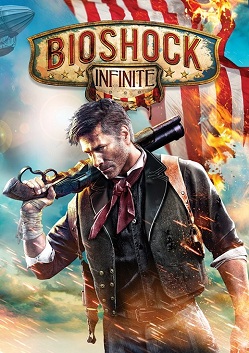

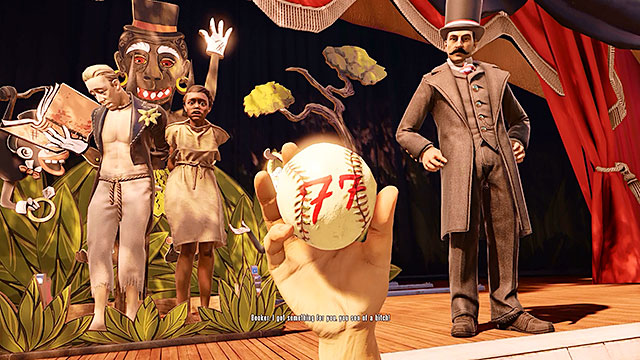





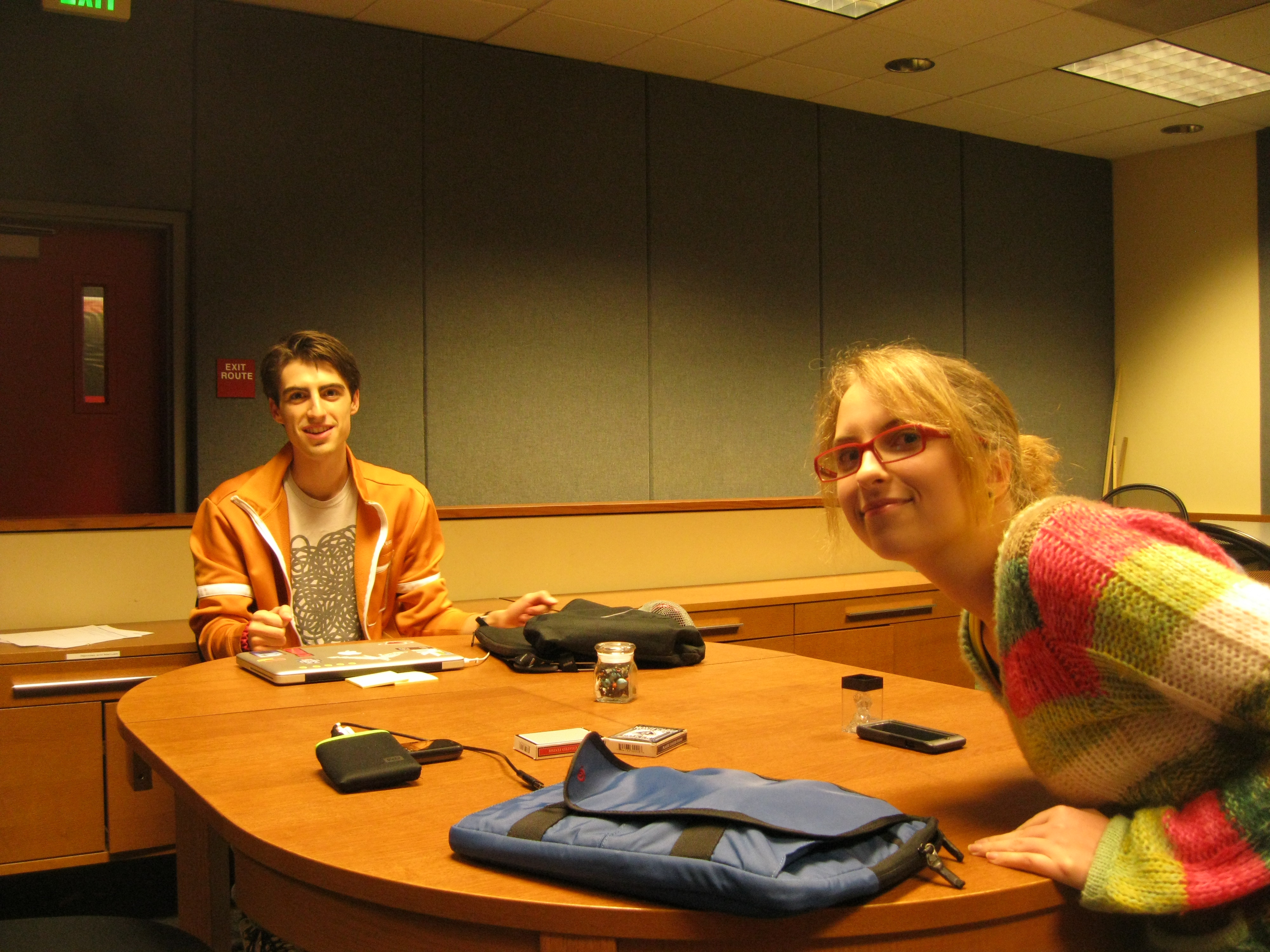



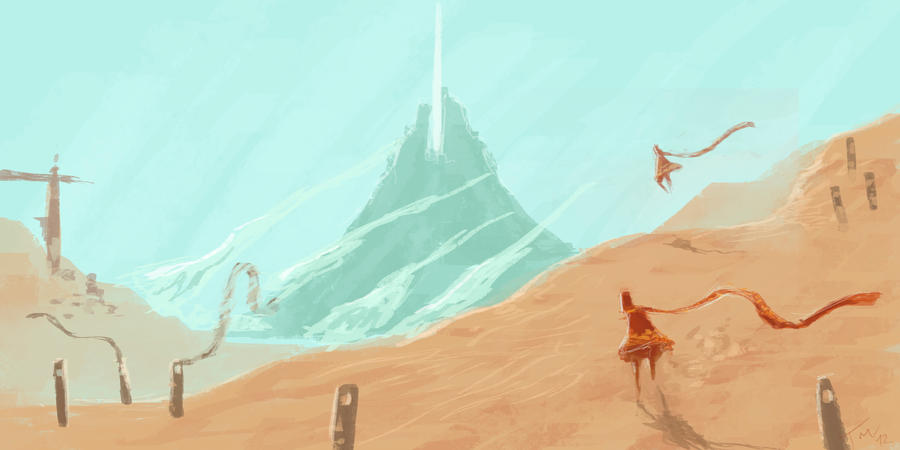
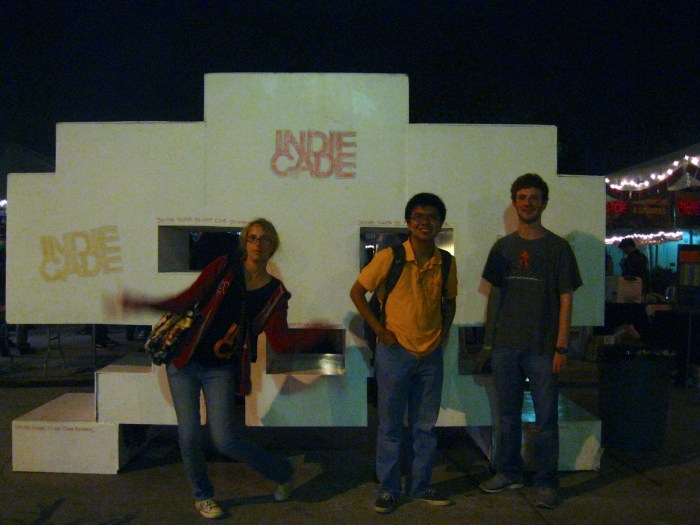



 KEVIN JAMES WONG